-
Innovation vs. Inertia
- Posted on 8th May
- Category: Newsletter

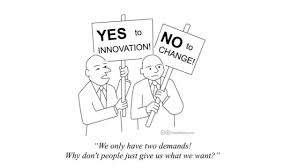
Innovation vs. Inertia. That's the tug of war I'm feeling most during these crazy times. If you know me and read this newsletter, you can guess which one I prefer. I want to see more innovation coming out of this crisis. But while everyone says they're innovating, I feel that inertia is winning out. It often does. It's always easier to maintain the status quo, and during a time of crisis, just getting back to the status quo can seem like a big win.
I admit - it would be nice to go back to the world I was living in around early March. But in actuality, we're learning that in early-March, we just thought we were living in the BC. In actuality, the virus was probably already in Europe as early as November, and in the US by January, if not earlier. Underneath the calm, we were already in the middle of the crisis. Inertia was killing us, and we didn't even know it.
Likewise, the film business wasn't all hunky-dory before this crisis hit. I don't care what part of the film business you work in - if you are honest with yourself, I'm pretty sure you'd admit that the old system wasn't working all that great. Whether you're a filmmaker, or a festival programmer, a sales agent, a brand film marketer, or a studio mogul, the status quo hasn't been great for awhile. Heck, even Netflix and Amazon were dealing with debt, competition, standing out in an attention economy and runaway costs. Wherever you sat in the film world BC, things were shaky. There's a reason Netflix's break-out show was called House of Cards.
I bring this up because I've been having a lot of conversations with people in the industry lately, and the conversations always fall into two categories - people who want to blow things up, and build something new, and those who feel we just need to get back to normal again. Innovation isn't technology, either. If you re-build the same system, but just move it online during covid, that's not innovation. That's just maintaining the status quo with some newfangled trappings. That comes from inertia, actually.
Innovation vs. inertia. And if I was to bet on what will happen next, I'd bet on a lot of inertia and return to the status quo, and a lot less on innovation and new models. Because innovation is hard, and the opportunity costs can bring on...inertia.
That's one of the reasons I've been writing this newsletter (since 2006) - to try to push for less inertia and more innovation. My very first post was about imagining possible futures for the media arts. In retrospect, that post is pretty clunky, but the push towards innovation was there. During this past week, I've been getting a lot of feedback to my post about film festivals, which just ran in IndieWire as well, and most of it has been positive. But the emails, posts and conversations I've enjoyed most have been the ones where people say something to the extent of - ok, how do we come out of this and build something better? And that's what I hope to keep pushing for while most of us are stuck at home - getting past the inertia and innovating for the future. That's definitely not easy when you're wearing a mask and gloves, and trying not to touch your face. But it's a lot better than going back to the status quo.
My Interview on the Content That Moves Podcast
Jesse Roesler of Credo Nonfiction has a great ongoing podcast called Content That Moves, which is sponsored by BrandStorytelling, and he interviewed me back in January during their conference at Sundance about branded content and distribution.

While I am biased, I think we had a great conversation that would be useful for any brand thinking about how to make quality films that get real distribution - in film festivals, theaters and/or broadcast and SVOD. And as people seem to be moving budgets away from traditional marketing into more "genuine" content, this can be a good time to think about when it makes sense to get such content out beyond YouTube or your owned channels. Those also make sense, and should be part of any distribution equation, but often you want things on Netflix or NatGeo, or something like that, and that's what we're discussing here. It's probably also a useful conversation for anyone working in this space, or wanting to, as a filmmaker, but that wasn't the focus of our talk.
I also recommend checking out Jesse/Credo's other work - he's a good filmmaker and his company is making some great stuff. And the podcast has other strong interviews, with many more good ones coming soon. Listen here.
Stuff I'm Reading: Film
Can Filmmakers and Festivals Collaborate to Make a Better Future? That's the gist of what I'm asking in my updated Op-Ed for IndieWire, which is a slight rewrite of my piece here last week. They titled it: Filmmakers Should Avoid Online Film Festivals, Unless They Ask These Questions — Opinion: Many filmmakers are wondering if they should accept offers from online programs. Here are the hard questions they should ask. Not a ton of changes from before, so no need to read it again, but if you missed it, this version is edited and adds some small points.

Drive-In O-Rama - Everyone wants in on the drive-in game now. Some recent great links - Vilnius (Lithuania) turned its airport into a drive-in; a guy made a home-made drive-in for $100 (this is half-brilliant and half-The Onion; and h/t to Kelly Devine); and the CTC folks made a guide to opening a drive-in (via Celluloid Junkie)
Vimeo Launched Stories in Place - a small collection of short films made by artists about small businesses, supporting them during this time of crisis. I'm loving the creativity that I am seeing on so many platforms during this crisis, and this is among the better ideas. Here's a shot from one of my favorites of the batch:

Deadline Shows the P&L for Yesterday - In a real coup, Deadline got a hold of a participation statement from Universal for Yesterday, which shows how a film can gross almost $154-Million globally, be on track to net $45-M but somehow show an $88-M loss. A lot of it is because of hefty distribution fees, plus overhead, and other creative accounting. But while this is a bigger movie, any indie filmmaker or investor should read this article and the attached screenshot of the statement closely. When I ran the Transparency Project at Sundance, I saw about a thousand of these from multiple films, and they were all pretty similar to this one. It shows just how hard it can be for any cast/crew or investor to make back anything once a distributor does their accounting.
The DPA Reports on the Impact of Covid-19 on Doc Filmmakers - Last week, I reported on how the crisis is impacting artists, and one of the Documentary Producers Alliance board members sent me their recent survey results - Among those surveyed - "80-85% had already been significantly, negatively impacted by the COVID-19 crisis, and as of late March, roughly 70% of projects had already been delayed, with 40% of all projects being postponed indefinitely. For the roughly 30 projects for which our members could determine, and did report, actual or estimated losses: Overall losses for this small subset of projects totaled more than $3 million, with a median loss of $60,000 per project." Not insignificant numbers. Note: the data isn't online yet, but is public and should be reported on soon.
The Death and Rebirth of Hollywood? - Everyone and their mom has sent me this post from Richard Janes, so it's probably worth reading if you've missed it. I think most of them are just hoping he's right that things look good for indie producers. And I hope he's right, but too few people are noting what I think is his most salient point, and one that very few producers are doing: "Indie producers have to become real entrepreneurs building brands, direct-to-audience relationships, and building strategies to generate the heat that agents once did for a very select few." Amen, and now is the time to do that brand-building work.
Reviews are in on the VR Film Premiere - The SF Weekly review of the Ask No Questions VR premiere is in, and apparently the experience was pretty good - if you can stand wearing VR goggles for 2 hours. I'm not a fan or doing this anytime soon, but it was a good way to approach a premiere, and get some press, during this lockdown.
Archive Valley is offering free Archival Footage Consulting to Filmmakers During the Month of May.Great offer for filmmakers at a time when you can make a lot of content with archival.
Quibi is What Happens when you value content more than users - According to Mike Masnick at TechDirt, and I agree. I could write 20 posts about everything done wrong and how to fix it at Quibi, but I'd have to charge someone a billion dollars. Masnick's post is pretty good. Funny thing is, I think more people may be talking about the VR launch above than Quibi.
And they've turned to YouTube to Try to Boost Growth - Wait, isn't Quibi not TV, not IGTV and not...YouTube? But as TubeFilter reports, they've started airing episodes on YouTube (twice, in both horizontal and vertical formats...I'm laughing so hard I am crying as I type this). This is going to be the funniest biz-school case study of failure, perhaps ever. At this point, having fired their head of marketing, they should just randomly grab some user off TikTok and appoint them head of marketing. Or maybe anyone with a phone in their hand (or breathing...)? Because almost any random person could do a better job here.
What I'm Reading: Branded Content
The Brand Film Awards take place today (May 7, 2020) and they have a set of online panels and you can watch the awards online. Info and registration is here. I was on the jury this year, and there was some great work, so I can't wait to see the awards show. The online workshop is at 2pm est, and the awards should run at 4pm est.
How to Do Brand Journalism Right: The folks at Brand Storytelling continue to do great work, and had a great panel last week on brand journalism: The True Story of Brands Telling True Stories. You can watch the recording on their YouTube channel, and if you haven't already, look into and sign up for future events here. (and I'll be participating in more of them soon).
Entertainment Consumption during Covid-19 Tips - UTA posted on LinkedIn about 4 tips for brands thinking about content. They are: develop your streaming strategy now (because SVOD is where it's at); embrace comedy (the top genre); Go live (stream); and double-down on talent alliances. Read the full post here.
What I'm Reading: Misc

Watch The Diary of Anne Frank, performed on Zoom - by the Park Square Theater, normally of St. Paul, Minnesota, the theater has performed and recorded a Zoom-based production of the play, and it's surprisingly awesome. I think I found this via the NYT, but while it doesn't replace live-theater, it has its own charms and it seems, so new artistic possibilities. You can watch the full performance here and donate here.
-

Where's the Filmmaker in the Online Fest Planning?
- Posted on 30th Apr
- Category: Newsletter

With all of these online versions of film festivals popping up, I keep getting asked by filmmakers – “should we participate in this?” Or more often – “am I missing something? Why would we do this?” My answer is always the same – if you are launching a brand-new film that is still seeking distribution, no. If you have a short, or an older film, or one where you have locked in distribution (and if your distributor agrees), or one where you are doing a DIY release – sure, or at least maybe. But if you are trying to premiere a feature film, and you don’t yet have distribution, then as of now you can’t consider these online festivals because buyers consider them a conflict with their distribution of your film. They do NOT see it as word-of-mouth building, or good PR, or a way to test/prove audience demand. They see it as a distraction at best, and lost income, or a loss of control or a loss of premiere status at worst.
That’s why you don’t see many feature films premiering as part of the SXSW/Amazon deal (the terms didn’t help). And its why Tribeca quickly announced that their new “We are the World” festival isn’t intended for new films, either. Because until Ted Sarandos, or someone else at Netflix, gives the greenlight for films to premiere at online festivals before streaming, then no one is going to do it.
I am helping about eleven films with their festivals and distribution right now (brand clients and one film that I produced), and most of them are in festival limbo land. Almost every day, I get new updates from film festivals that are canceling, postponing or rescheduling. Dozens of festivals have emailed to say they’re launching an online/virtual festival (it’s not virtual unless you’re in VR, but that’s another post), and they ask whether the selected film wants to participate. Of those letters, only two addressed why the filmmaker might want to participate, and how the system would work. Only one offered any kind of compensation to the filmmakers. But even when the festival offered compensation, that wouldn’t work for my clients with new films. There remains too much danger that distributors will see this as a problem. But still, kudos to those two festivals. Even though my clients couldn’t take their offers, we had something to consider, and it was clear that the festival had thought about how this impacted the filmmaker. It seems to me that film festivals launching these new online events are thinking about many things – how to serve local audiences; how to keep their brands alive; how to salvage some part of their festival; how to not lose as much money; how to build a new model; and all of these are good & valid things to consider and they might be solved by an online festival (I remain skeptical).
Film festivals have two main sets of constituents – audiences and filmmakers – and you can’t build a program for the former and forget the latter, but that’s precisely what’s happening. Too few people are asking – how can we build something that best helps filmmakers? And that’s the question that matters. Especially at a time when most of them have lost all of their income, and when they are under severe duress – remember, festivals, even as they struggle, might bounce back next year. But a film stuck in limbo could completely disappear, possibly along with the career of the filmmaker who made it. As I speak with other producers, the common question is – are any of these festivals gathering any kind of input from filmmakers on what we want? I’m sure a few are doing this, but this is a field-wide issue, and it needs a field-wide debate and solution(s). If we’re going to use this crisis to build a new business model, let’s not do it in a vacuum. Wouldn’t it be better if we could step back and use this opportunity to build a new system that’s better than the old one? Perhaps one that helps filmmakers while serving audiences?
So, what do filmmakers want? Well, we need to gather a few of them and figure that out, and at minimum this will require another post, but in my conversations a few things keep coming up. First, we need to acknowledge that in the current climate, we don’t just need festivals for industry discovery. We also need them to help audiences discover films, but that discovery/premiere aspect needs to be timed to the release of the film to the public. That probably means most festivals – all but the biggest industry fests – need to rethink their “discovery” programming and focus on bringing audiences to films that have distribution sorted out, and are just about to launch. This probably means that festivals need to think differently about how and when they promote themselves and their films (a lot earlier for both). And we need to figure out how to push those audiences to films post-festival as well (via email lists with opt-ins, on social media, etc.) We also need to discuss compensation. There was an argument – one that I believed in for a long time as a festival programmer, that discovery and promotion were enough. But in a “virtual” world, there needs to be compensation for filmmakers, even when your festival is struggling. And there needs to be data transparency – to filmmakers, amongst festivals, to distributors, and in some cases, to the public. These are just a few of the things that I keep hearing, but I’m sure that if we gathered some filmmakers with festivals (and distributors, and press, etc.) we’d get even better ideas. And yes, this is another argument for needing a new AIVF…

Data via Film Fest Alliance Now, I can’t close this post without acknowledging a few things. First – I am not slamming festivals here. I am saying we need to re-think the current online model, but I understand why everyone has rushed to just get their festivals online. I also know that a lot of these festivals are understaffed and are just trying to survive as well. And I know some of them are probably having this conversation already, through the Festival Alliance and other places, and I’m just not part of all of those conversations. But I also know that many filmmakers are having these conversations and questioning this model in their own forums, and I think it’s time we have more of this conversation out loud.
What I'm Reading: Film
NYWIFT Webinar: Brave New World: Reimagining Film Festivals in a Time of Crisis - TONIGHT - I'll be a panelist joining this conversation tonight, 6pm est - I doubt we'll discuss the above issues, but focus instead on the good stuff. From the organizers: When SXSW cancelled, it sent shockwaves through the indie film world. But the creative forces that have kept independent film vibrant over the decades are rising to meet the current crisis. Until we can once again gather in large crowds, the show is going on. Film festivals are moving online or reviving older forms such as using drive-ins for locations to gather at safe physical distances. This panel brings together a group of creatives to discuss how people and organizations are responding nimbly and re-imagining ways to connect and support filmmakers and audiences. We will explore the possibilities for evolving out of this crisis to create more fluid and far-reaching concepts of film promotion, audience engagement, and distribution. Join us for a conversation with Lori Cheatle, Maori Karmael Holmes, Brian Newman, Alison Willmore, Jeffrey Winter and Michelle Materre (moderator). Register here.
Trolls World Tour's digital Release Worked - The WSJ reports (paywall) that Trolls has made an estimated $100M+ in rentals, meaning about $77M back to Universal, which is more than the original made in theaters in the same time period. Whether it does well with ongoing rentals and has a better total revenue take remains to be seen, but as the WSJ reports, this is good news for Universal and bad news for theaters. Importantly, they also did a survey, and 51% of respondents said they "definitely" would have seen it in theaters, and one-fifth said they never rent digital downloads. With 5-Million rentals, that's 1 million new customers gained for the online sales. As I said at the start of this crisis, this will lead to some permanent window re-ordering. Of course, this has led to a massive freak-out by theaters, especially AMC - read the raving mad letter fired off by their CEO in Deadline; which led Wall Street and Indiewire to beg for some calm. This is gonna be fun to watch. Pop some popcorn and wait and watch for more fireworks soon.

Quibi Sent a Cease and Desist Letter to a Fan Podcast - In the 'you can't make this shit up' department- some fans made a podcast devoted to all things Quibi, and called it Quibiverse. They soon received a cease and desist letter from the lawyers and changed their podcast to an anti-Quibi site called Streamiverse. Other than industry folks, no one I know has bothered to talk about Quibi once, and they shut down free publicity. As I said to David Beebe when he posted this story on LinkedIn, "If you made a show about some old folks screwing up the launch of a platform..." via AvClub.
Festivals are Starting to Report on their Virtual Results - With CPH:DOX up first. While Screen reported on this earlier, The Danish Film Institute has a great interview with Festival Director Tine Fischer on how it came together, what worked, and what didn't work as well. A great piece for anyone contemplating virtual events.
Another Survey Shows People Aren't Excited about Returning to Movie Theaters and Events - Variety has the results of this survey, showing an unsurprising expectation to keep streaming a lot more, but going to a movie theater ranks just above going on a cruise again. Both will survive, but no one is going back to them fast, that's for sure, and festivals should pay close attention to these ongoing, always similar survey results.
What are the Ethics of Documentary Production in a Pandemic? Asks Carrie Lozano of the IDA, and the answer is she doesn't know- nor does anyone else, yet. But as she says, we do know, "As I write this, there is no scientific understanding, no testing capacity, nor treatment, to ensure that you will not contract or spread a potentially deadly disease." So she argues for a lot more caution and for doc makers not to make quick judgements based on what covid-19 is NOT (not a war, etc.) meaning the ethics are different and still being decided. Worth a read and more contemplation.
People are Making some cool DIY Outdoor Community screenings - and The Atlantic has a great photo essay showing them, now. Check out this photo from Raul Arboleda/AFP/Getty below, and click on the link to see more:

Aerial view as a film is projected on a giant screen at a park, so that quarantined people in their apartments watch a movie from home amid the coronavirus (COVID-19) pandemic, in Bogota, on April 23, 2020. - Colombia extended mandatory preventive isolation due to COVID-19 until at least May 11. (Photo by Raul ARBOLEDA / AFP) (Photo by RAUL ARBOLEDA/AFP via Getty Images) What I'm Reading: Branded Content
Brands Should Become Executive Producers - says William Swann of BBH LA in Muse by Clio - where he argues brands should work with the major platforms to jointly fund/produce/market better content. I've been helping clients do just this for 8 years now, but welcome the enthusiasm for more brands to do the same - it's time to become content partners (EPs) instead of just making branded content, and "create content that's attractive to distributors and delights audiences." Swann's article is a great intro into how it works. My one issue with it - very few agencies can actually do this work (although they all say they can).
What I'm Reading: Misc
We have some (ugly but much needed) data on how Covid-19 has impacted the arts - Artist Relief, an emergency grant program started by a few arts orgs and their funders, has an online data tool that reports survey results from artists applying for aid. The results are updated in real time, and it ain't pretty, but man, is it needed and useful information. As of the time I write this, the economic impact (lost income and incurred expenses) was already at $285 Million+. And as Indiewire reported from the data, 71% of filmmakers were fully unemployed as a result of the pandemic. And the survey isn't finished yet (or the crisis, of course).

Art Galleries have lost 70% of their income, and one-third don't expect to survive the crisis - according to a survey from the Arts Newspaper. And in a separate article, they also report that the UK could lose half of its creative businesses. Heavy stuff.
How to Move Forward without a Map: Ideo has some ideas on how to move forward when there is no map. I like this the most: "Experimenting doesn’t have to result in a full-scale business model transformation or a polished new offering. This is a moment of extreme leniency: Customers will forgive scrappiness and even mistakes, and they’ll appreciate effort and vulnerability from organizations who try. Moreover, experimenting in low-fidelity ways allows teams to quickly iterate, minimize costs, and preserve optionality. In other words, there’s little investment required for potentially high return."
Permission to Pause - Arts Programming During a Crisis - This is a great article for anyone working in the arts, even film festivals, and I found it via Noah Cowan, a film fest professional on LinkedIn. Peter Hemminger of the QuickDraw Arts Society gives some great advice on slowing down, re-thinking what your event would look like the way you want to do it online (not just moving it online), and asking what your audience wants/needs now. As well as giving yourself time to adapt. Highly recommended reading for all arts professionals.
Facebook to allow Paid LiveStreams - In a first for the platform, they will now allow artists to charge a fee for LiveStreams, which will not only help musicians, but also anyone offering live events - like a film with a live Q&A for example. Good news, and a smart move from FB, who usually only allow these things with free or ad support. Variety reports.
Travis Scott's Virtual Show on Fortnight Had 12M+ Viewers - setting a record. CNN reports - along with everyone - but this is newsworthy stuff, and part of the future of media, so I thought it was worth noting here.
-
We Need an Army
- Posted on 23rd Apr
- Category: Newsletter

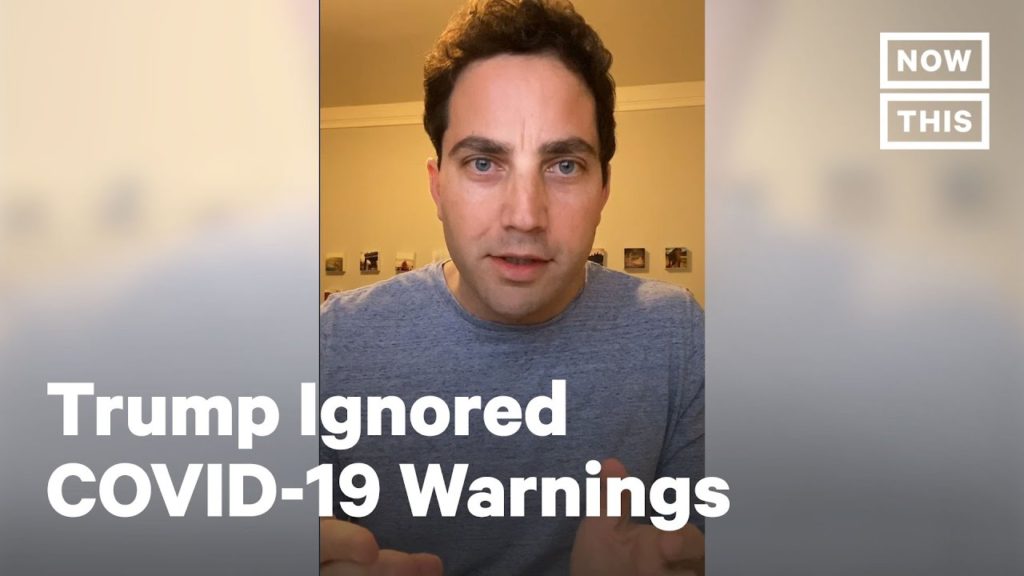
from NowThis Lately, when I speak with my closer film business friends about this Fall, the topic inevitably returns to how the film industry might re-open and whether we’ll be able to attend Toronto or other Fall festivals? The answer to this is no, but my new reply is always: I’m less concerned about whether or not we will gather in theaters than whether we’ll be able to gather in Washington DC, in protest, come November when Trump tries to stop the election.
Fair Warning – Stop Now if you don’t want politics – non-political news is “below the fold.”
Don’t think I’m crazy for too long on this one. And if this despot doesn’t try to stop the elections or seriously curtail voting, we have another issue already – Biden is going to lose. Now, before you get in a fuss and think I’m some Bernie-Bro or whatever, I’m not (promise). But we need to win outside of our bubble, and that’s where we’re losing. Biden has no traction online. And that’s the only place that matters anymore – if not BC, definitely after, where we live now. As Bob Lefsetz recently said, “Joe’s got no media traction, he doesn’t know how to make news. And he’s too old to figure out social media. The only sunlight he’s gotten recently has been when Bernie, Barack and Elizabeth endorsed him.” And while Lefsetz thinks the right VP pick will make the difference, it won’t – no one has ever voted for a VP. Bottom line, Joe’s got no game. As one filmmaker told me recently, “Everyone is stuck with the notion that we are generally winning the battle over facts and losing the battle for hearts. Biden does nothing to help with the battle for the heart and soul of America.” And that’s going to be a huge problem come November, when our media is overwhelmed/inundated/obliterated by a sea of misinformation, all while truth is already distorted. The recent astro-turf protests are a harbinger of what’s to come; and if you aren’t terrified by how a few thousand people, organized by a handful of folks, could take over the news and change the conversation, then what does terrify you?
But I do see a way we can win. What we can do, as a film industry, is come to his rescue. We are storytellers, and we know how the web works, right? We know how to shoot, edit and post (online that is). We know how to craft a message and we know how to get it out to people. But instead of spending our corona-time worrying about when our industry can tell its stories again, we need to be using all of this time towards one thing – winning the information/attention war. We need an army of filmmakers making the short form, social-friendly video that Biden will never get around to making for himself. It needs to be persuasive – capable of swaying someone’s opinion. And it needs to be a massive effort. This video by Nico Pitney on NowThis (screenshot above) was pretty popular and effective, but imagine what all of our filmmaker friends could do with a little time. I bet it would look more like this – from Inequality Media – and it would have more impact.

from: Inequality Media Guess what else we have – an army of unemployed filmmakers sitting at home, with time to spare. But who will pay for them to work, you ask? No one. I am sorry to report that there will be no WPA for this. The major foundations won’t fund it, as they are too timid. This is going to be free work, but it has to be done, and all of our free time should be going towards this goal. (A quick aside here- I realize I am writing from a place of privilege, and that not everyone has free time, or can afford to think about political battles. I am also guessing most of my readers fall into a similar camp as me (same bubble). I’m also aware that tons of people are doing the hard work- on the ground organizing, etc. to win this, and I am not trying to belittle that work when I say it needs to be augmented with more work from all of us in the film world.) We need thousands of new films every day. We need creatively made stories- that tell the truth, but that appeal to the heart. And we need help spreading these messages. If you don’t want to spend the next four years (or longer) hating life, then take your talent and put all of that energy into making media that helps, now. Have a camera on your phone – oh yeah, we all do – use it to film something creative now. Know how to edit, use that skill to help other filmmakers to edit these stories into something compelling. Already finished a film about topic-X that really matters, and don’t have time to make another? Well, I bet too few people saw it, or will see it. So re-edit your old films into shorter messages that get to the point fast, and show people how we can make a difference on that issue. I assure you, whatever you care about, and whatever your old films are about – there’s an angle to be pushed here. Don’t live in the US? We’re ruining your country from afar, so you’re part of this fight, too. Don’t want to make videos for the election? Make them just to get out the real news – there’s too much crap from those who decry fake news while spreading it…like a virus. Need inspiration? Copy Inequality Media. But make it for your cause, your issue, your talent. Because we all need it. Now, off my soap-box and back to the news:
Stuff I'm Reading: Film #PausedFilms on The Outside Story - Self-promotion of film promotion of other film promotion, alert - we launched a cool new feature on The Outside Story's IG page this past week, and will be keeping it up for awhile - we're turning the spotlight on other films stuck in limbo post-SXSW, Tribeca, etc. We call them #pausedfilms, and we hope people will follow their films, track them and watch them once you are able. Here's this week's #pausedfilm. 
The NYT Covers the Fragile Eco-System of Festivals - Aisha Harris writes a nice Op-Ed for the NYT on the fragility of the fest eco-system. As she notes, "When there isn’t a crisis going on, putting up a festival is already an often financially precarious endeavor. Of course, some organizers will find ways to adapt and work around it, or are already doing so, but the ability to undertake an event with so many moving parts and variables just became infinitely more difficult. The ramifications are reverberating far and wide." My fear is that it's gonna be worse than anyone quoted in this article seems to be contemplating.
Netflix Made Some Docs Avail for Free to Educators - On YouTube - This is a pretty cool gesture from Netflix for teachers stuck at home. Educational guides as well. Surprising that they worked out rights to show them for free on YouTube as well, but great.
CauseCinema (iGems) made a free e-book for Earth Day, with info on some of the best environmental docs - Get info on the films, links to where you can watch them and more. Check it out here.
Sundance Responds to Covid-19 with Emergency Grants and More: The good folks at Sundance have responded relatively quickly to the crisis, with some great grants for artists, film organizations and more. Some items are for alumni only, but not everything, and many resources are online for free. I'd dig into this more, but it's been reported everywhere, and you can read for yourself.
Arthouse Cinemas are Getting Creative - Via the Arthouse Convergence Newsletter,Sidewalk Cinemas and the Texas Theater are making "home cinema survival kit" concessions available for curbside pickup. And I'm loving Reel Rumble from Bryn Mawr Film Institute and featuring ArtsQuest vs. Renew Theaters in a Family Feud style show. Small efforts, but very crafty and interesting ways to engage audiences during the crisis.

Reel Rumble Fandango Bought Vudu - I think Vudu is actually one of the better interfaces out there, and while it wasn't a good fit for WalMart, maybe it will be for NBCUniversal/Fandango. The Verge reports.
Unfortunately, movie theaters remain last on the list of cultural events people see themselves attending anytime soon - according to actual data - from IMPACTS data - which is tracking which cultural institutions people expect to attend at pre-covid levels. One chart:

Return to Normal:Note Theaters being Last But we can watch a documentary in VR instead - Ask No Questions - a film which premiered at Slamdance and was set for many other festivals, is holding a VR screening in conjunction with San Francisco's DocFest and VR MovieHouse. You can get more info and tickets here, Deadline wrote about it here, and this is what it will look like:

Branded Content:
Every Covid-Commercial is the Same - Great video on the same-ness of every company's crisis ad. Yes, we all know why this happens, but it shows why another approach is needed.

But Not Yeti-Streams - Not your average Covid-Commercial and quite possibly the most original idea from a brand during the crisis, yet - Yeti launched Yeti+Virtual Streams, which you must experience to understand. Brilliant stuff, folks. Like most of what Yeti does (former client, but I wasn't involved in this one).

BackBone Media takes a Look at Trends Across Lifestyle Media and Marketing - and finds some good news. I've worked with the folks at Backbone on many campaigns for clients, and they're good, hardworking people. They've done a good job compiling what's going on in this space, and among the findings - a positive response to positive messages, at-home tutorials, entertainment, and escape from the news cycle (all to be expected). They recommend focusing on the long-tail over short-term sales.
MISC:
This is the Wake-Up Call for Nonprofits and Foundations to Get Political - Good luck with that, but if there's ever been a time they should take their heads out of their a-ses and get political, it's now. Love the fire analogy here - "So the fires rage on and worsen as the firestarters get smarter and bolder, knowing that no matter what they do, the townsfolks will only respond to the effects of the fires, not try to stop them from setting fires." Via NonprofitAF .
Strangers Project Collects Quarantine Stories - I stumbled into the Strangers Project in Hell's Kitchen back in December, 2019 and have been a fan ever since. It's explained here, but essentially, this guy collects stories from strangers and shares them online. He's been doing it for over 11 years, and has 60K+ stories. Normally, you have to contribute your story in person, but for a limited (we hope) time, he's collecting stories online. Contribute your story of what it's like to be you, now, in quarantine, here.
-
Quarantine Questions
- Posted on 22nd Apr
- Category: Newsletter

McCarthy in Deadline Some questions on my mind these past few days of quarantine, in no particular order.
What's Up With Online Film Festival Timing? - While CPH:DOX had a seemingly successful online festival (see below), I have serious questions as to how this works for other fests. But my number one question remains - in a virtual world, why are all of these online festivals taking place at different time periods, dictated by old systems built to avoid conflict, when they could all take place at the same time and amplify their message? Most of them are showing the same films anyway, and even with their idiosyncrasies built in, it seems to me that it would be better to move your dates, slow down a bit and explore the power of collaboration and joint-marketing instead of just plowing ahead.
Whither the Trifecta/Fall Festivals? - I've heard rumors that the Trifecta (Venice, Telluride and Toronto) Festivals plan to take place in some form this September, along with many regional Fall film festivals. But I give you one quote: "There have been 10 influenza pandemics in the past 250-plus years—two started in the northern hemisphere winter, three in the spring, two in the summer and three in the fall. All had a peak second wave approximately six months after emergence of the virus in the human population, regardless of what initial introduction occurred." (emphasis mine), This comes from the National Academies of Sciences, Engineering, and Medicine's expertly named report - Rapid Expert Consultation on SARS-CoV-2 Survival in Relation to Temperature and Humidity and Potential for Seasonality for the COVID-19 Pandemic (April 7, 2020). Let's do the math: March+6=September. So either these festivals get cancelled or we show up there and risk dying. That math doesn't work - and your potential attendees know it, even if you and your board don't, Fall festival folks.
Where's the Limbo-Film Social Media - There are hundreds of films stuck in limbo after the cancellation of SXSW, Tribeca and other major festivals. For a variety of reasons, I was looking up many of them on social media this past week. Without naming any names, I was surprised that by my estimates, more than 90% of these films have zero presence on social media - not a Facebook page or Instagram account, much less anything on other platforms. Isn't this 2020? Aren't we trying to build audiences? Have you checked out the social media presence of any distributor not named A24 or Neon lately? Do you think they're going to build your audience for your virtual premiere? Aren't many of us stuck at home with some time? Isn't this a good time to get creative and build an audience? To wit: 
When do we get our IGTV Films? I spent two hours the other night watching the brilliant #24viralmonologues on IGTV from the folks at the 24Hr Plays. In brief, a playwright sends a short script to an actor who performs the piece by themselves, on their phones, and submits the results, which are entered into the contest. Who cares about the contest. It works. It's brilliant. It's pretty much a new art-form, and it could be duplicated and turned into a film. Or a campaign for a limbo-film. Why aren't we seeing more of these? Am I missing a treasure-trove of them? If so, please send them my way, or start making them now, filmmakers. Here's my favorite: Motherfuckers by Stephen Adly Guirgis, performed by Andre Royo. And yes, I am hinting that limbo-films should copy this strategy.
And how are people finding time to stream movies with all of this new content? Yes, streaming hours have skyrocketed. But I can barely find time to turn on Netflix, much less think about any new service, when I have so much new online content to watch elsewhere. Not just the IGTV #24hrviralmonologues, but Alvin Ailey dancers in #aileyallaccess, or @NewYorkNico's #bestNYaccent or even print stuff like Quentin Tarantino's Movie Reviews on the New Beverly Cinema's website. or Orchestras around the world recording Beethoven with every musician at home, and I haven't even mentioned all the stuff like #goodnightwithDolly on TikTok, gaming, etc. It was an attention economy before this virus hit, but it's even more of one now.
Can Quibi Survive its horrible launch? I'm a known Quibi skeptic, but the response to their launch was so bad that it almost made me flip to being a supporter, I mean I love indie films which means I'll always root for the underdog. Here are my favorite two quotes: Bob Lefesetz: “the kids can smell a rat.” And “it's chopped-up television. Do you think that's appealing?” Or try this one from Spencer Kornhaber in The Atlantic in a piece titled - Quibi is a Vast Wasteland: "After having spent a day and a half gorging on “quick bites,” I have zero shows to enthusiastically recommend. What I instead have is the sort of soul-deep burnout I haven’t felt since middle-school sick days spent on the couch with Regis Philbin." Ouch. And don't get me started on the fact they disabled the ability to share content- on mobile - in 2020 - jeesh. They claimed 1.7M downloads in week one- which no one believes, but is definitely less than they'd hoped to receive (but more than any indie/arthouse film app ever got). You can't make this shit up, but you can imagine what could have been built with a Billion dollars instead of this garbage.

Quibi v TikTok If people aren't flocking to VR headsets for entertainment now, when exactly is that going to happen? I can find lots of thought-pieces about how we might switch to VR now, but very little evidence that anyone is finding time to bother with VR for entertainment, and more reports about what isn't working. Tribeca's Immersive program, Cinema 360 launches tomorrow, and maybe they'll prove this wrong, but it's looking like people prefer drinking virtual happy hours on Zoom over actual VR.
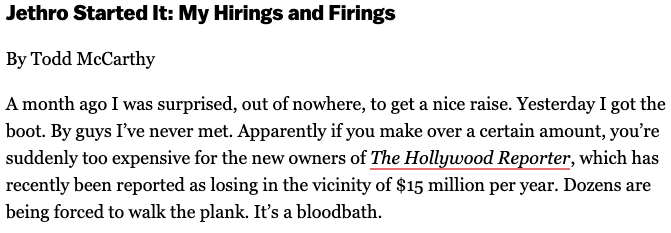
How do the Trades survive an Academy-awards advertising slow-down? Valence Media already announced major cuts at the Hollywood Reporter today. That same report had them losing $10M a year before the virus hit. The dirty secret of all of the trades has been that they make the majority of their revenue from Academy awards campaigns each year - it ain't the news, folks. So with the Academy Awards themselves in question, and the Summer block-buster season taking a major hit, and as I mentioned above, a possible issue with Fall launch festivals, how does this work for the trades? Sure, there will be a massive push for whatever films can launch this Fall, but is that going to make up for the lost revenue before that time? This sucks for all of us, but none more so than the good people who just lost jobs. Read critic Todd McCarthy's "It's a Bloodbath" piece here.
Ok, I've got more questions, but this could get depressing.
Stuff I'm Reading: Film New York State Extends Tax Credits (good), but screws low-budgets (packs bags...): Scott Macaulay of Filmmaker Magazine (a producer as well) reports on the situation. With budgets being cut like crazy, this is better news than perhaps we'd hoped. But by making a floor of $1M in NYC to qualify, the system is telling low-budget filmmakers to take a hike. Producer Mynette Louie sums up the problem well, " “I think that excluding smaller productions from being subsidized by tax credits might mean that some bolder, riskier films (which are generally smaller budget) become harder to finance,” she agrees. “It might also mean that lower-budgeted films helmed by working-class filmmakers with limited connections to rich people will have more of an uphill battle. Both outcomes would be really unfortunate as the world may need these types of films the most to help digest, heal, and progress in a post-pandemic world.” And Mike Ryan gives us the subtext: "“This seals it, New York is no longer a town that supports edgy alternative culture media. Get the message, young artists? Other cities await you.”
MoMA celebrates Home Movies: IndieWire reports on what might be my favorite MoMA project ever - How to See Home Movies - an archival project to preserve, protect and project the "largest body of moving-image work created in the 20th Century - " home movies. Don't get it? Think it's not important? I dare you to watch this entire 6 minute video and a) not cry; b) not go looking for your (grand-) parent's old home movies. CPH:DOX Did Pretty Well as a Virtual Festival - Screen International reports that they had 66,500 streams, which they translate that via a factor of 1.7 (thinking more than 1 person was at home watching) as 113,000 attendees, which is just 1K less than attended in person last year. I'm not buying that factor, but regardless, that's a pretty good number for a first time, last-minute effort. My worry is that the Danes are like Torontonians - there's something in the water there that makes them greater cinephiles. But let's see. AFI Does Online Right, by Curation - Another festival doing it right, curating great selections and making value-add content around these films online, instead of simply pivoting to an online festival. AFI launches AFI MovieClub: Movies to Watch Together While We're Apart. You can sign-up for updates here. Twitch Opened up Its Watch parties to Partners - this could end up being big news, as Twitch allows some partners to hold massive watch parties using its system. It's not just a watch party, but one where you can interact in real-time with a lot of others. Only with Amazon Prime and for Prime members, of course, but this could be a good virtual solution. CordCutters reports. Branded Content Purpose-Based Storytelling During & After the Global Pandemic – I participated in this BrandStorytelling-hosted panel last week, and the video is up now on their YouTube Channel. Tune in for advice on what brands should be doing when it comes to story + action. BrandStorytelling LiveStreams - Tune in to other virtual panels in these great BrandStorytelling Livestreams being offered a couple times each week. I honestly don't have many links to share about branded content, because there's been a huge slowdown in the space as companies deal with other aspects of the crisis. But the folks at BrandStorytelling are soldiering on, with some great online content to help prepare people for the future. 
MISC Nonprofits - Tough Times Call for Tough Action: A Decision Framework for Nonprofit Leaders and Boards. SeaChange has this brief report (pdf) with strategic advice for nonprofits during this crisis, including thoughts about saving cash, considering mergers, and what you can and can't do now. I know many nonprofits in the film world who should be reading this, or should have read it a few weeks ago. Key advice - "resist magical thinking." (h/t to Erik Speakman, a smart consultant in Atlanta) -
Inventing the New Reality
- Posted on 9th Apr
- Category: What We Do

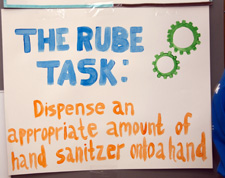
Rube Goldbergin' some Sanitizer Last week, I looked at all of the ways I think the film industry is going to be impacted by this crisis, and how we won’t be going back to normal. I promised a Part Two that would be more positive, but remember that I did post positive thoughts just a week earlier. If you are looking for a list of clear solutions, quit reading now. I don’t have them, and I don’t think anyone else does, either. Instead, here’s some thoughts on how we should approach this new reality – a mindset we might bring to the situation – in the form of some slogans we would do well to remember. These are mainly written towards arthouse/indie filmmakers, but I think they apply to branded content folks (my other audience) as well.
It’s not til the Tide Goes Out that You See Who’s Swimming Naked Often attributed to Warren Buffet, I think this slogan applies pretty well to the film business right now (all business?). While a lot of the damage from the crisis is unique – so many people losing jobs at once, no one can gather or work together, etc. – there’s also a fair amount of things that always sucked about the film business, but this crisis just laid them bare, to where we can’t deny their reality any longer. Guess what? Festivals – other than the top 5-6 – never helped sell films. As Marj Safinia said in a group conference call I was on recently – that was a false security blanket that has now been removed. The indie film world, and docs in particular, were never a sustainable career-path. Arthouse distribution and exhibition was always a shitty business. A lot of this was a house of cards. It sucks to have a band-aid ripped off fast, but the pain ends quicker. I know this sounds pessimistic, but it’s not – now that we’ve been forced to collectively realize that few of us have our pants on below those Zoom screens, we can also start to build something based less on fiction and more on the reality we now know we live in. Invent the Future This has been the slogan of most of my keynotes since 2009 – following the advice of Alan Kay, who said – the best way to predict the future is to invent it (some credit Dennis Gabor). The idea remains the same – predictions about the future are notoriously tricky, but smart folks shouldn’t wait around to see what happens. As I said last week, we’re not going back to normal, but since no one knows what the new normal is going to look like, we should invent (and build) the one we want. And that’s one of the sole things that gives me comfort when thinking about the future – a bunch of folks are probably inventing it right now. They might not even know it yet. But sure enough, a few years from now we’ll have entire new systems – a new reality – that was built out of this crisis.
Build Your Plan-A – Everything else is Plan B When indie filmmakers try to build a plan for their films, I’ve always given the same advice, but I think it applies to all of us now. Build a Plan A that encompasses what you can do for your film on your own. If you don’t get into Sundance, and don’t get bought by A24 or Netflix, how would you release your film to audiences given your resources – both time and money – what’s the best you could do? That is your Plan A, and you plan for it as if that is what’s going to happen. Then, if you get lucky and a distributor does want to buy your film, that offer is a Plan B. Plan B might be better than Plan A – in the best case, it should be better than what you could do on your own. But now you have something to compare their offer to, your Plan A, and that gives you a way to figure out just how good that offer is, because you now have a baseline from which to judge. Maybe they aren’t offering something you would do, or you could do better, well, now you can negotiate because you have a Plan A. But if you don’t have a Plan A, then someone else’s Plan B is the only option you’re going to have, because you never made a plan. While this was advice for filmmaker’s thinking about distribution of their films, I think it applies to how we should plan for much about creative-life, post-covid-19.
Collaboration is Key If there’s one thing this virus should have taught us by now, it’s the importance of collaboration. We’ve seen the bad shit that happens from lack of it as well. We can all point to numerous examples of good things we’ve seen recently that only came about because of collaboration. But while filmmaking itself is a collaborative, team effort, I’ve always found the film community (non-documentary, mainly) to be the least collaborative group I know when it comes to everything except production. I think we’ll need to change this going forward. Here’s just a few examples where I think collaboration would work great:
A. Filmmakers – so many filmmakers were simultaneously hit with the same problems - cancelled festival premieres, and trying to figure out how to get the attention of buyers and/or audiences with their films. Instead of going it alone, why not band together? Instead of waiting for Festival-X to re-schedule, or Sales Agent-Y to pitch Buyer-Z, why not band together with several others who are stuck in the same boat and bring your films to audiences, together. Why not offer a “festival” of films that were in Spring Festivals as a package? Instead of relying on curators from those festivals, why not curate yourselves? I’d gladly pay $50 for 5 new science fiction films on Vimeo, and if you band together, you might have the mailing lists and resources to reach me. When we can gather again, why not a tour that you curate? This can play out multiple ways, but you get my drift.
B. Film Festivals – There’s a lot of room for more collaboration between film festivals, and I don’t mean just by joining an alliance. We’ll have to see what this means in practice, but the recently announced Toronto Film Fest initiative to go back to its roots as a “festival of festivals” is a great idea. Let’s take it a step further. Since 90% of the film festivals out there program the same films anyway, why do we need separate organizations in each town? The few festivals that are brands would do well to think about some version of M&A expansion. Others should collaborate to make more efficient tours of films and shared resources. Why launch thousands of small online fests that few people log into, when we could make one bigger one with an SVOD platform? All of these ideas existed before, but now is the time to implement them.
C. Theaters – Your job is not popping popcorn, but bringing cinema to your local audience – which most theater owners already know. People who like cinema will show back up later, but in the meantime, why give away those audiences (via their email addresses) to others who want to reach them? Band together, via AHC or EuropaCinemas or both, and build your own OTT platform (not individually, but together for scale) and you own the audience and share the revenue with distributors instead of vice-versa. Shift72 is powering many similar ideas, and they would be a good place to start.
D. Branded Content – so many brands make films about their work on climate change, or empowering women, or other important social issues. But if they really want to have an impact on any of these issues – and aren’t just virtue signaling – why not band together to have a greater impact? A series of films, podcasts, articles and yes, even ads, from multiple brands, simultaneously, would have much greater impact than that of any brand’s content “going it alone.”
E. Audience Building – Kevin Kelly was right when he said (in 2008) that all you really need is 1000 true fans. Filmmakers are not marketers. That’s been a hard lesson for the field over the years, but I’m going to try one more time – there’s never been a better time to build your fan/audience base. Everyone is stuck at home, scrolling through social media, and many of us have some spare time. Now is the time to focus on building your fan base for you as an artist, and for your (upcoming?) film. And you’re going to need that connection, because guess what – the world is going to have less of what we relied on for audience-building and marketing before – less: film festivals (and their curators), distributors, theaters, print publications, broadcasters, paid critics - there’s a long list of disappeared parts of the system. What will remain? Social media and your direct connection to that audience. But only if you build it, participate with it and nurture it. There’s also a big role here for collaboration amongst the other players mentioned above – theaters, festivals, distributors, and brands. While I argued above that theaters shouldn’t just give away their emails, I would advocate for everyone to join together to build a system, with varying levels of permissions and opt-ins, that would allow me as a consumer to subscribe to updates from multiple artists, distributors, theaters, brands, etc. I don’t want to just hear from Film Forum. I want to know when Tom Putnam releases Dark Divide, no matter where it’s playing, and I want to subscribe to him, just once and get future updates too. I’d be happy for all of you to be able to notify me – when it comes to FilmLinc, or when it comes to Netflix, or when it’s at your festival (but only when I’m visiting your town). Let’s build this system together. Festivals, theaters and brands should be curating selections for me, but not just of what they’re playing or funding. If I trust you, give me a reason to interact year round.
F. Advocacy – nonprofit service organizations should be merging together, or at least joining forces, and should start doing real advocacy, which means lobbying and other moves to build a better system for our future. The recent IDA/ITVS/Firelight seminars were incredible, but just a start towards what we need to see more often. Last year, I wrote a popular post about the need for a new AIVF – and we still need it. As I wrote then: “Yes, we have great organizations that might take up the cause – IFP, Sundance, Impact Partners, IDA, Kartemquin and many great festivals (if I didn’t mention your favorite org, it’s unintentional) – but solving the problems around building a better ecosystem for independent media artists is bigger than any one of their missions and if they haven’t found the time to do it on their own since 2006, it’s not going to happen now (but they’ll collaborate on the answer). We need a new AIVF, but for the modern era. I’m not sure what it should look like, but I know we need it, or something like it. I imagine it’s more of a with-profit than a nonprofit, meaning some hybrid of nonprofit activism and services, coupled with some for-profit, entrepreneurial activities.” Let’s get that started, finally.These are just a few, pretty easy to say and hard to execute ideas – I know- but we have to start inventing somewhere, and I’m convinced that these ideas will be key to our success.
Stuff I'm Reading: Film Emergency Grants for Filmmakers & Others - I imagine most of my readers have heard about these, but just in case - POV, the great PBS doc series, has launched an emergency fund for artists/filmmakers. Info and application forms are here. And Field of Vision/TOPIC have launched a fund for documentary freelancers, including producers, editors, assistants - anyone in the field it seems, which is great! Apply here. Last, The Opportunity Agenda and PopCollab offer $1K emergency grants for Social Impact artists and cultural strategists - apply here.

Netflix Makes "Spoiler" Billboards to Keep People Inside - brilliant ad campaign here. While the actual "social impact" of distancing is obviously minor here, it's a great idea. WeAreSocialMedia reports. Need to apply for Coronavirus Relief as a Filmmaker? The IDA, ITVS and Firelight teamed up to bring together this super-helpful workshop on how to apply for the CARES/PPP relief program- whether you are a freelancer or small business. Honestly, this was probably the single best educational program or Zoom meeting I've attended since the lockdown began. The video is worth watching and the link has many other helpful resources - I think I used all of them.

The Future of Film Report is live - Future of Film's Alex Stolz launched his FOF Report recently, and it's a great read. I particularly like that he and his contributors focused primarily on how technology will change production and development, and most of it is very positive and interesting for anyone thinking about the future of film. It's time to learn online marketing based on behavioral data - While this was written BC (before-covid), it's very timely now that we all need to learn how to market titles online smartly, using data. Anthony Kaufman reports on some success stories, and how to get started for Filmmaker Magazine. One good example, from Jim Cummings of Thunder Road - "The big takeaway for Cummings was the realization that he could connect with potential audiences and bypass traditional forms of gatekeeping. “Let’s say you’re having a hard time getting a Variety review. Now, you can just target people on Facebook who like Variety, and it’s the equivalent of getting press in Variety,” he explains. “By spending money on this or that platform, you’re able to hijack an outlet that wouldn’t let you have access without them having anything to do with it.” Cornavirus, Streaming and Piracy - I was interviewed in this nice little article from Aric Jenkins in Fortune back in late March (feels like a decade ago, right) about how the virus might impact streaming and piracy. I'm less worried about piracy long term (I see it as a failure in the business model), but do think behavior has changed, ever more quickly, and people want what they want, when they want it, on what device, yesterday.Stuff I'm Reading: Branded Content

Steak-Umm is Leading Brand Messaging around Covid-19 - This isn't branded content, per se, but Steak-Umm has been doing an awesome job with its social media account (it's actually a person named Nathan Allebach according to FastCo). If Steak-Umm can find a way to make relevant, smart and informed content during this virus, you have no excuse not to do the same, BrandX (insert your name here). Hell, this is better than most nonprofits I follow. Brand-Purpose Storytelling Post-Covid: I participated in an online panel/Zoom about purpose-driven storytelling by brands - how to do it, and how to do it now - that was organized by Brand Storytelling. The video will reside here when they post it soon. This is one of a series of talks they are hosting, and it's a great resource for brands, brand story-tellers, and just about anyone in the media space. I recommend listening to the discussions, and you can get the schedule and register (for free) here. Budweiser is "not in advertising mode" says Anheuser-Busch InBev US CMO Marcel Marcondes to DigiDay - more than once - saying they are putting money into services and other areas. Like a lot of brands, I suspect. They did run this ad for their program to shift sports support to Red Cross support.Stuff I'm Reading: Miscellany The Internet Archive made more books available for free, and people freaked out - A few folks, including Vox and Redef, picked up the BS-laden Author's Guild version of this story, so do yourself a favor and read the Mike Masnick "real news" version of the same. Basically, the Internet Archive has made digital copies of books - in a completely legal manner - and then made them available for free, with DRM - for lending - just like a library does. Publishers and the Author's Guild freaked out -but don't assume they are in the right here, as if they had their way, regular libraries wouldn't exist either. Oh wait, they barely do right now, and that's why this National Emergency Library is both a great thing, and legal. Video Gaming, Live Streaming and E-Sports viewing is off the charts - this was to be expected, but Techcrunch reports video game usage spiked 75%; while Endgadget reports that Twitch viewing was up 23% to just over 1.2 Billion hrs. That's a lot of usage competing with movies and everything else! Oh, and while we don't have sports to compete with, we do have E-Sports, which ESPN added, showing over 12 hrs on April 5th alone. (H/T to Unsupervised Learning for the links). Ignore the Pressure to be Productive- Says Aisha Ahmad in the Chronicle of Higher Education (h/t Leah Warshawski) - Lots of variations on this sentiment have run lately, but I like this one the most. From the article: "Understand that this is a marathon. If you sprint at the beginning, you will vomit on your shoes by the end of the month. Emotionally prepare for this crisis to continue for 12 to 18 months, followed by a slow recovery. If it ends sooner, be pleasantly surprised. Right now, work toward establishing your serenity, productivity, and wellness under sustained disaster conditions.” The Obie Awards moved online (like everyone) and is donating the savings to artists (like everyone should) - The NYT reports on what should become standard practice for everyone moving their events online. -
Inventing the New Reality
- Posted on 8th Apr
- Category: Newsletter
Rube Goldbergin' some Sanitizer Last week, I looked at all of the ways I think the film industry is going to be impacted by this crisis, and how we won’t be going back to normal. I promised a Part Two that would be more positive, but remember that I did post positive thoughts just a week earlier. If you are looking for a list of clear solutions, quit reading now. I don’t have them, and I don’t think anyone else does, either. Instead, here’s some thoughts on how we should approach this new reality – a mindset we might bring to the situation – in the form of some slogans we would do well to remember. These are mainly written towards arthouse/indie filmmakers, but I think they apply to branded content folks (my other audience) as well.
It’s not til the Tide Goes Out that You See Who’s Swimming Naked Often attributed to Warren Buffet, I think this slogan applies pretty well to the film business right now (all business?). While a lot of the damage from the crisis is unique – so many people losing jobs at once, no one can gather or work together, etc. – there’s also a fair amount of things that always sucked about the film business, but this crisis just laid them bare, to where we can’t deny their reality any longer. Guess what? Festivals – other than the top 5-6 – never helped sell films. As Marj Safinia said in a group conference call I was on recently – that was a false security blanket that has now been removed. The indie film world, and docs in particular, were never a sustainable career-path. Arthouse distribution and exhibition was always a shitty business. A lot of this was a house of cards. It sucks to have a band-aid ripped off fast, but the pain ends quicker. I know this sounds pessimistic, but it’s not – now that we’ve been forced to collectively realize that few of us have our pants on below those Zoom screens, we can also start to build something based less on fiction and more on the reality we now know we live in. Invent the Future This has been the slogan of most of my keynotes since 2009 – following the advice of Alan Kay, who said – the best way to predict the future is to invent it (some credit Dennis Gabor). The idea remains the same – predictions about the future are notoriously tricky, but smart folks shouldn’t wait around to see what happens. As I said last week, we’re not going back to normal, but since no one knows what the new normal is going to look like, we should invent (and build) the one we want. And that’s one of the sole things that gives me comfort when thinking about the future – a bunch of folks are probably inventing it right now. They might not even know it yet. But sure enough, a few years from now we’ll have entire new systems – a new reality – that was built out of this crisis.
Build Your Plan-A – Everything else is Plan B When indie filmmakers try to build a plan for their films, I’ve always given the same advice, but I think it applies to all of us now. Build a Plan A that encompasses what you can do for your film on your own. If you don’t get into Sundance, and don’t get bought by A24 or Netflix, how would you release your film to audiences given your resources – both time and money – what’s the best you could do? That is your Plan A, and you plan for it as if that is what’s going to happen. Then, if you get lucky and a distributor does want to buy your film, that offer is a Plan B. Plan B might be better than Plan A – in the best case, it should be better than what you could do on your own. But now you have something to compare their offer to, your Plan A, and that gives you a way to figure out just how good that offer is, because you now have a baseline from which to judge. Maybe they aren’t offering something you would do, or you could do better, well, now you can negotiate because you have a Plan A. But if you don’t have a Plan A, then someone else’s Plan B is the only option you’re going to have, because you never made a plan. While this was advice for filmmaker’s thinking about distribution of their films, I think it applies to how we should plan for much about creative-life, post-covid-19.
Collaboration is Key If there’s one thing this virus should have taught us by now, it’s the importance of collaboration. We’ve seen the bad shit that happens from lack of it as well. We can all point to numerous examples of good things we’ve seen recently that only came about because of collaboration. But while filmmaking itself is a collaborative, team effort, I’ve always found the film community (non-documentary, mainly) to be the least collaborative group I know when it comes to everything except production. I think we’ll need to change this going forward. Here’s just a few examples where I think collaboration would work great:
A. Filmmakers – so many filmmakers were simultaneously hit with the same problems - cancelled festival premieres, and trying to figure out how to get the attention of buyers and/or audiences with their films. Instead of going it alone, why not band together? Instead of waiting for Festival-X to re-schedule, or Sales Agent-Y to pitch Buyer-Z, why not band together with several others who are stuck in the same boat and bring your films to audiences, together. Why not offer a “festival” of films that were in Spring Festivals as a package? Instead of relying on curators from those festivals, why not curate yourselves? I’d gladly pay $50 for 5 new science fiction films on Vimeo, and if you band together, you might have the mailing lists and resources to reach me. When we can gather again, why not a tour that you curate? This can play out multiple ways, but you get my drift.
B. Film Festivals – There’s a lot of room for more collaboration between film festivals, and I don’t mean just by joining an alliance. We’ll have to see what this means in practice, but the recently announced Toronto Film Fest initiative to go back to its roots as a “festival of festivals” is a great idea. Let’s take it a step further. Since 90% of the film festivals out there program the same films anyway, why do we need separate organizations in each town? The few festivals that are brands would do well to think about some version of M&A expansion. Others should collaborate to make more efficient tours of films and shared resources. Why launch thousands of small online fests that few people log into, when we could make one bigger one with an SVOD platform? All of these ideas existed before, but now is the time to implement them.
C. Theaters – Your job is not popping popcorn, but bringing cinema to your local audience – which most theater owners already know. People who like cinema will show back up later, but in the meantime, why give away those audiences (via their email addresses) to others who want to reach them? Band together, via AHC or EuropaCinemas or both, and build your own OTT platform (not individually, but together for scale) and you own the audience and share the revenue with distributors instead of vice-versa. Shift72 is powering many similar ideas, and they would be a good place to start.
D. Branded Content – so many brands make films about their work on climate change, or empowering women, or other important social issues. But if they really want to have an impact on any of these issues – and aren’t just virtue signaling – why not band together to have a greater impact? A series of films, podcasts, articles and yes, even ads, from multiple brands, simultaneously, would have much greater impact than that of any brand’s content “going it alone.”
E. Audience Building – Kevin Kelly was right when he said (in 2008) that all you really need is 1000 true fans. Filmmakers are not marketers. That’s been a hard lesson for the field over the years, but I’m going to try one more time – there’s never been a better time to build your fan/audience base. Everyone is stuck at home, scrolling through social media, and many of us have some spare time. Now is the time to focus on building your fan base for you as an artist, and for your (upcoming?) film. And you’re going to need that connection, because guess what – the world is going to have less of what we relied on for audience-building and marketing before – less: film festivals (and their curators), distributors, theaters, print publications, broadcasters, paid critics - there’s a long list of disappeared parts of the system. What will remain? Social media and your direct connection to that audience. But only if you build it, participate with it and nurture it. There’s also a big role here for collaboration amongst the other players mentioned above – theaters, festivals, distributors, and brands. While I argued above that theaters shouldn’t just give away their emails, I would advocate for everyone to join together to build a system, with varying levels of permissions and opt-ins, that would allow me as a consumer to subscribe to updates from multiple artists, distributors, theaters, brands, etc. I don’t want to just hear from Film Forum. I want to know when Tom Putnam releases Dark Divide, no matter where it’s playing, and I want to subscribe to him, just once and get future updates too. I’d be happy for all of you to be able to notify me – when it comes to FilmLinc, or when it comes to Netflix, or when it’s at your festival (but only when I’m visiting your town). Let’s build this system together. Festivals, theaters and brands should be curating selections for me, but not just of what they’re playing or funding. If I trust you, give me a reason to interact year round.
F. Advocacy – nonprofit service organizations should be merging together, or at least joining forces, and should start doing real advocacy, which means lobbying and other moves to build a better system for our future. The recent IDA/ITVS/Firelight seminars were incredible, but just a start towards what we need to see more often. Last year, I wrote a popular post about the need for a new AIVF – and we still need it. As I wrote then: “Yes, we have great organizations that might take up the cause – IFP, Sundance, Impact Partners, IDA, Kartemquin and many great festivals (if I didn’t mention your favorite org, it’s unintentional) – but solving the problems around building a better ecosystem for independent media artists is bigger than any one of their missions and if they haven’t found the time to do it on their own since 2006, it’s not going to happen now (but they’ll collaborate on the answer). We need a new AIVF, but for the modern era. I’m not sure what it should look like, but I know we need it, or something like it. I imagine it’s more of a with-profit than a nonprofit, meaning some hybrid of nonprofit activism and services, coupled with some for-profit, entrepreneurial activities.” Let’s get that started, finally.These are just a few, pretty easy to say and hard to execute ideas – I know- but we have to start inventing somewhere, and I’m convinced that these ideas will be key to our success.
Stuff I'm Reading: Film Emergency Grants for Filmmakers & Others - I imagine most of my readers have heard about these, but just in case - POV, the great PBS doc series, has launched an emergency fund for artists/filmmakers. Info and application forms are here. And Field of Vision/TOPIC have launched a fund for documentary freelancers, including producers, editors, assistants - anyone in the field it seems, which is great! Apply here. Last, The Opportunity Agenda and PopCollab offer $1K emergency grants for Social Impact artists and cultural strategists - apply here.
Netflix Makes "Spoiler" Billboards to Keep People Inside - brilliant ad campaign here. While the actual "social impact" of distancing is obviously minor here, it's a great idea. WeAreSocialMedia reports.
Need to apply for Coronavirus Relief as a Filmmaker? The IDA, ITVS and Firelight teamed up to bring together this super-helpful workshop on how to apply for the CARES/PPP relief program- whether you are a freelancer or small business. Honestly, this was probably the single best educational program or Zoom meeting I've attended since the lockdown began. The video is worth watching and the link has many other helpful resources - I think I used all of them.
The Future of Film Report is live - Future of Film's Alex Stolz launched his FOF Report recently, and it's a great read. I particularly like that he and his contributors focused primarily on how technology will change production and development, and most of it is very positive and interesting for anyone thinking about the future of film.
It's time to learn online marketing based on behavioral data - While this was written BC (before-covid), it's very timely now that we all need to learn how to market titles online smartly, using data. Anthony Kaufman reports on some success stories, and how to get started for Filmmaker Magazine. One good example, from Jim Cummings of Thunder Road - "The big takeaway for Cummings was the realization that he could connect with potential audiences and bypass traditional forms of gatekeeping. “Let’s say you’re having a hard time getting a Variety review. Now, you can just target people on Facebook who like Variety, and it’s the equivalent of getting press in Variety,” he explains. “By spending money on this or that platform, you’re able to hijack an outlet that wouldn’t let you have access without them having anything to do with it.”
Cornavirus, Streaming and Piracy - I was interviewed in this nice little article from Aric Jenkins in Fortune back in late March (feels like a decade ago, right) about how the virus might impact streaming and piracy. I'm less worried about piracy long term (I see it as a failure in the business model), but do think behavior has changed, ever more quickly, and people want what they want, when they want it, on what device, yesterday. Stuff I'm Reading: Branded Content
Steak-Umm is Leading Brand Messaging around Covid-19 - This isn't branded content, per se, but Steak-Umm has been doing an awesome job with its social media account (it's actually a person named Nathan Allebach according to FastCo). If Steak-Umm can find a way to make relevant, smart and informed content during this virus, you have no excuse not to do the same, BrandX (insert your name here). Hell, this is better than most nonprofits I follow.
Brand-Purpose Storytelling Post-Covid: I participated in an online panel/Zoom about purpose-driven storytelling by brands - how to do it, and how to do it now - that was organized by Brand Storytelling. The video will reside here when they post it soon. This is one of a series of talks they are hosting, and it's a great resource for brands, brand story-tellers, and just about anyone in the media space. I recommend listening to the discussions, and you can get the schedule and register (for free) here.
Budweiser is "not in advertising mode" says Anheuser-Busch InBev US CMO Marcel Marcondes to DigiDay - more than once - saying they are putting money into services and other areas. Like a lot of brands, I suspect. They did run this ad for their program to shift sports support to Red Cross support.
Stuff I'm Reading: Miscellany The Internet Archive made more books available for free, and people freaked out - A few folks, including Vox and Redef, picked up the BS-laden Author's Guild version of this story, so do yourself a favor and read the Mike Masnick "real news" version of the same. Basically, the Internet Archive has made digital copies of books - in a completely legal manner - and then made them available for free, with DRM - for lending - just like a library does. Publishers and the Author's Guild freaked out -but don't assume they are in the right here, as if they had their way, regular libraries wouldn't exist either. Oh wait, they barely do right now, and that's why this National Emergency Library is both a great thing, and legal. Video Gaming, Live Streaming and E-Sports viewing is off the charts - this was to be expected, but Techcrunch reports video game usage spiked 75%; while Endgadget reports that Twitch viewing was up 23% to just over 1.2 Billion hrs. That's a lot of usage competing with movies and everything else! Oh, and while we don't have sports to compete with, we do have E-Sports, which ESPN added, showing over 12 hrs on April 5th alone. (H/T to Unsupervised Learning for the links). Ignore the Pressure to be Productive- Says Aisha Ahmad in the Chronicle of Higher Education (h/t Leah Warshawski) - Lots of variations on this sentiment have run lately, but I like this one the most. From the article: "Understand that this is a marathon. If you sprint at the beginning, you will vomit on your shoes by the end of the month. Emotionally prepare for this crisis to continue for 12 to 18 months, followed by a slow recovery. If it ends sooner, be pleasantly surprised. Right now, work toward establishing your serenity, productivity, and wellness under sustained disaster conditions.” The Obie Awards moved online (like everyone) and is donating the savings to artists (like everyone should) - The NYT reports on what should become standard practice for everyone moving their events online. -
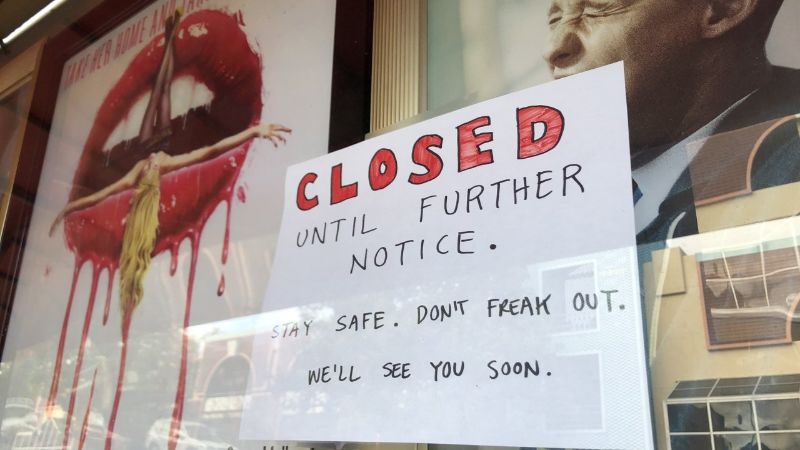
Confronting the New Reality, Pt 1.
- Posted on 2nd Apr
- Category: Newsletter

Bonnie: Don’t let it end this way. Brian: All things end badly, or else they wouldn’t end. AKA Flanagan’s Law, from Cocktail During the past few weeks, I’ve joined many conference calls discussing how the film industry might change due to the Covid-19 crisis. And I’ve read many articles about this. With very few exceptions, they’ve all been based around an extreme optimism that assumes life will return to normal at some point. And wouldn’t that be nice?
But without even going so far as taking the most apocalyptic viewpoint, I think this is going to end pretty badly for a lot of the film industry. We aren’t going back to normal. At the risk of setting off a panic, here are my thoughts on how Covid-19 is going to impact the business, with a focus on what I care about – indie and arthouse films (I'll look at branded content soon). As I say at the end, this isn’t about getting us depressed, but rather, a hope that if we face the facts, perhaps we can build a better response. Production Netflix doesn’t see production starting up again before June, but some are saying they’re already planning for 18 months of production problems. While this may have the silver lining of a need for finished content, see below, let’s use that as a baseline and pretend work stops for another 3-6 months. This means thousands of below-the-line workers and freelancers without jobs. How many can hang on and come back to work when production stops for that long? Who will have given up and taken a safe job – if those even exist anymore – and of those who have stuck around, which ones are going to want to work on a low-mid-budget, arthouse/indie film anymore? Film sets have always been cesspools of germs and breeding grounds for shared viruses, how many people want to go back to that? And if we can get back to production, will states cut tax incentive programs, or see those as essential job builders? I predict we’ll see a bifurcation into the extreme high and the low – more than we had before – where good crew only work on the well-funded Hollywood shoots and series. Recent college grads who have moved back home with their parents will work on the super-low budgets, but finding crew for the middle-ground will be next to impossible. That said, producers should have lots of development done and ready to go forward. Smart folks will put out promises to and lock in crew as early as possible. Cast But let’s say you put together a crew and are ready to shoot? You need cast. But most great cast were learning pre-virus that the best way to put food on the table was from series and big Hollywood films. And those have been on hold for a long time, until now. Now, there’s a need for great talent for all of those backlogged series and franchises. There goes your cast. On the plus side – they are also stuck at home doing nothing now. Smart producers will record some social media for their finished films, to assist with audience building when they launch their films. This will take some arm-twisting, but less than usual. A World without Agents? You typically cast your film with the help of agents, who also step in to help with sales (and sometimes financing). But the big agencies are already making deep cuts and laying off staff, and had bloated expenses and overhead to begin with. How many of them will survive? How many projects are they putting together for clients who can’t work? And how many sales are they making of films that can’t be produced? Sure, there will be a brief deluge of projects to be sold from the crop that were completed or close to it when this crisis hit, but what happens once you’ve sold those? Oh, and if you built your backup plan on live events, like Endeavor, what happens when that disappears? The agencies are so ingrained in the business that it’s the hardest sector to imagine disappearing, but visit one of their offices and marvel at the structures and the overhead for a few minutes, and it’s just as hard to imagine how you keep all of that going after this bottoms out. No, we won’t see the end of agents, but we will see a thinning of the sector, and perhaps a return to the days when agents were nothing special (I admit, as I type this, it sounds like I’ve slipped into a dreamland). Film Festivals Film festivals have always been run closer to the bone than any aspect of this business. They’ve relied on cheap labor, donations, sponsorships, grants, memberships, and… unpaid labor (volunteers) to keep the doors open. Most are putting on a good face now, but I doubt many can survive a big loss in income. Will SXSW or Tribeca survive a loss of millions from cancelled festivals? Will the smaller regional festivals fare any better? Who will be sponsoring festivals when places like Airbnb are cutting $800-million from their marketing budget? Sundance has many big donors and the prestige to continue. So does Cannes, Berlin, Toronto…and who else? Film Society of Lincoln Center, a bastion for the rich, older folks of NYC, has already laid off 50% of its full-time staff and all of its part-timers. Yes, they do more than serve the rich, but you get my drift – If they can’t raise emergency funds, who can?
People have always said we have too many festivals and need a thinning of the crowd, but I don’t think anyone expected that to mean what we’re about to witness. (side note: everyone comes home from Sundance with the flu during normal times. How many people want to go there in an ongoing covid-19 world? I can’t bear to think about that just yet.) Several festivals have decided to go the virtual route to replace lost screenings. The Garden State Film Festival claimed to have 15,000 viewers for 240 films (many were shorts). Not bad, actually. The most aggressive of these efforts, and maybe the most innovative, came from CPH:DOX, and reportedly demand was so great they salvaged 50-70% of their potential lost revenue and the market & forum (industry facing sections) performed pretty well for a first-effort. But CPH:DOX gets a lot of government support, which is not the case for most US festivals, and this surely helped them adapt quickly and build new systems. I can see this being replicated by the biggest festivals, and the most innovative, but few others. Meanwhile, those festivals who have moved online have (to my knowledge, universally) told filmmakers they can’t afford to share revenue from these screenings. Ok, in this crisis moment sure, but then they haven’t offered data, promises of future promotions or much else either. These may be unstated goals, but so far, one senses that a lot more thought has gone into how virtual offerings might help festivals, and local audiences, but filmmakers…not so much. Filmmakers have accepted all of this in the past, often in exchange for not much more than coach-class airfare, a hotel room and free wine and cheese (which was often a pick two out of three situation). But now you get less than that, and how does that word of mouth translate into future success in a virtual environment, exactly? I’m not sure, but let’s hope we can build some value-chain around the surviving ones, because the rest of this puzzle doesn’t seem to add up to any prettier of a picture. Theaters Even with the relief package, theaters are in a shaky spot. Before the virus hit, the big chains were already mired in debt, facing decreased attendance, and in danger of default. Perhaps the canary in this coal-mine is the closing of VIP Cinema Seating, their biggest supplier of luxury seats just this week. The hope has been that they can weather this until the virus subsides and people return to group gatherings. When theaters re-opened in China, many took it as a great sign. But then attendance averaged one person per day, and the government closed them again within days due to fears of a resurge in transmissions. Making matters worse, studies show people aren’t putting theaters high on their list of places to revisit anytime soon. We’re in for a longer-haul than most of even the biggest theaters can survive. I predict we’ll see a re-ordering of the major chains, with AMC and Regal in serious trouble. (Just after writing this, the WSJ reports that AMC hired restructuring lawyers yesterday.) And while smaller arthouses have always been scrappy, few have the resources in place to survive much of a downturn, and some have already made major cuts. While Criterion Collection and the Arthouse Convergence have started a GoFundMe to save arthouses, the results so far are less than encouraging. I’ve heard reports of more than a few beloved arthouses who only have enough cash to make it a month or two, and of many others who are already facing tough lease negotiations. How many will be able to survive based on the Cares Act and other government relief? In theory, they can pay salaries and rent and get loan forgiveness. Let’s hope this keeps some doors open, but my fear is the downturn will last longer than the relief. Now add to this the bigger, existential threat – the disappearance of windows. Even before this virus, windows- the time between when a film premieres in theaters and then online, were collapsing. As I predicted weeks ago, the crisis pushed everyone, from big to small, to jump into even shorter windows. My hunch is that most of them will learn what Netflix and Amazon already knew – few films needed theatrical releases for the bottom line (talent and awards were the only valid reasons anymore). And while you can argue that true cinema, like Parasite this past year, can only succeed with theatrical, and that blockbusters will always draw fans to theaters as well, the virus will decimate enough theaters that only those films will be able to find screens anymore. That won’t leave many screens for the rest of arthouse cinema. At the same time, none of the theaters had bothered to build any semblance of a plan for home-viewing before this happened. AMC theaters hired someone to liaison with studios to figure out a cut of that pie… the week before they closed their theaters. Arthouses have recently received offers from forward-thinking distributors to share revenue from VOD - if they help to promote these films that would have played their theaters to their members. But as Julie Anderson Friesen of CinemaFalls in Sioux Falls, South Dakota pointed out to me, these patron lists were built over years and a split of revenue only looks fair if you don’t think about the fact that those patrons are now on the email list of the distributor and will buy/rent future films, but none of that revenue will flow back to the source theater. Terms need to be negotiated. Of course, theaters could have banded together and made their own VOD platform, and showcased distributor’s films and shared revenue while keeping their patron relationships in place, but that was too hard to do when they were busy furloughing employees to stop the bleeding. Let me only gently remind them – this should have been done pre-crisis anyways. My hope here is that the crisis will lead to some form of shared list, where I as a consumer, could sign up for updates from both my local cinema, and from distributors and artists directly (opt-in and out, of course). We’ve needed that for a long time anyways (I proposed such a system back in 2011) Arthouse Distributors - But don’t worry for too long that those arthouse distributors are going to get rich building an ecosystem off the backs of the arthouses. Sure, they have might gain more emails now, but none have ever been in the business of trying new things to market their films. They put them in theaters and took out print ads in the paper, because that’s what always worked. Or did until those two places disappear during this crisis. How many have the budgets to properly market these new VOD systems? My guess is not (m)any. Arthouse content actually does need theatrical to survive – it’s not just a marketing tool, but a major revenue stream for indies, and arthouse films require the longer time to build word-of-mouth that a theatrical allows. Bottom line – arthouse distributors needed theaters more than anyone else. Without them, they will have trouble surviving. Not that they had it easy pre-virus. Many were also over-leveraged and/or had owners that were ready to sell before things got scary. Launching OTT channels during a crisis is not going to reverse their bad news. And there’s more. Conversations with buyers and sellers over the past couple of weeks shows that most sellers are going direct to the biggest SVOD/AVOD/OTT players and skipping distributors – because a lot of what those distributors do is gone now that theatrical is on hold (maybe forever), so less quality content is even available for them to buy and possibly distribute. None of this adds up to much in the way of good news. Documentary If there’s ever been a scrappy bunch of filmmakers who know how to organize and survive an apocalypse, it’s been the documentary filmmaking community. There are more support systems in place here than any part of the business. Unfortunately, the only films that have ever been a financial success have been the top 1%, usually musician or sports biopics (Amy, Senna), the occasional Blackfish or Free Solo, and Ken Burns. Many smart producers were moving to commissioned work only pre-virus, and this trend will accelerate. Serious and social-issue docs are going to have a very hard time. The talk among distributors for the past few years was that post-Trump’s election, no one wanted to watch serious films anymore because they were just too exhausted after a day of his tweets. Imagine what happens now when he’s helped cause an entire economy’s collapse while tweeting about his ratings. Meanwhile, sitting around home for a few weeks has gotten the doc community to wondering whether any of this is sustainable, especially if you weren’t born into privilege? No wonder the most popular topic on the D-Word forum has been about dealing with mental health issues. Equity and Financing So when all of this happens, who is going to finance these films? Private equity was always a gamble, but it becomes a bigger one when you have nothing but tax credits to lessen the burden. Oh wait, how many states will keep offering those as tax revenues decline across the board in a recession that may become a depression? But when smart equity investors look at the buyers that will be left, it’s going to be mainly major platforms - who aren’t looking for equity, and who will only splurge for a small number of titles. The reports of those few splurges – as always – will keep some dumb money flowing. But the smart money is going to be investing in M&A activity, if anything, for quite some time. SVOD Players Which brings us back to those big-guys and their new services. Disney and Apple just launched new services that need more content. How many new subscribers are they going to get for just their library content? And Netflix long-ago switched to an original content strategy, while building up mountains of debt, as they lost library content to Disney and Peacock. Peacock might now have Friends, but as a new service that needs eyeballs, it was planning to blast into consumer-consciousness based on the Olympics. Or at least sports…oh, wait. These major services won’t die, but we will likely see them buy up struggling smaller players to shore up their libraries and ensure new content comes there way post-virus. And none of them will be looking for niche, arthouse content anytime soon. The only services looking good here are suddenly ad-supported networks like Pluto (Viacom/CBS) and those attached to real businesses like…Amazon. (For the time being, let’s not even contemplate what happens if Amazon can’t ship packages anymore). But services build on selling toilet paper to the masses (both Advertising and Amazon) aren’t known for supporting quality arthouse films. While we’re thinking about streaming, perhaps we should deal now with the other new player – Quibi, which launches right when people have a lot of free time on their hands. But their business model was based on what’s usually also in your hand – your phone – which won’t look nearly as tempting when you’re stuck at home in front of a giant television loaded with content. Not to mention tons of free, live-streaming options on IGTV, and when you no longer have down-time to fill on that commute to your couch. Conclusion Ok, none of this looks very good, right? And before I get nasty comments, remember – I say all of this as someone who loves film festivals, arthouse theaters and even the agents and distributors (ok, maybe not the agents). But I think it’s better to face the reality of how this crisis is impacting the business, and how bad it might actually get, instead of just hoping for the best. That will allow us to dream up the correct responses, and maybe let us have a better chance at inventing the future. I promise to get back to the positive thoughts – on how we react to these realities – next week.
Stuff I'm Reading
Film

A theater in Texas turned its parking lot into a Drive-In to much success: Forbes reports.Innovation plus social distancing, plus movies for the win. PLUS - they launched alcohol and grocery delivery, too. Everyone picked up this story, it seems, but few reported that part, which shows just how innovative this theater has been.
Collaboration will be key to survival: If that's even possible, says Jordan Zakarin in the Observer. A great article on the issues confronting all aspects of the business, and some of the new initiatives from distributors and exhibitors.
Criterion Collection and the Arthouse Convergence have started an emergency fund to help indie cinemas to survive. As I mentioned above, donations haven't been stellar yet, but there's still time. And they need it: Donate here.
Matthew Ball has a trifecta of essays on how covid-19 is impacting movies/theaters, SVOD, PayTV and OTT, and Gaming. Not much new here, but it does have good data on where things were before-covid (bc) and what might happen next.
Sundance Curated some films you should watch: I've been arguing for over a decade that festivals need to promote their curatorial abilities between festivals, and many are finally doing that. Sundance joined in this week. Now, I find it hard to believe their programmers are sitting around only watching old Sundance movies, but it's a start. Let's hope they follow Montclair's example and curate some other films next.
MISC

You filled out the Census, right? When I posted this, response rates were just in the 30% range. Come on people.
How Artists Can Stay Afloat - and Thrive - During the Crisis - Billboard talks with several musicians who have turned to live streaming and merch, among other ideas, to pay the bills. Some are even mowing lawns, and pointing out that any income is good in a crisis. Many good ideas here, some of which would work for other artists.
The Brand Film Awards Finalists have been announced. I was lucky to serve on the jury this year, and there's some great stuff in the mix. They're announcing the winners on May 7th in a virtual event, including some panels and keynotes.
-
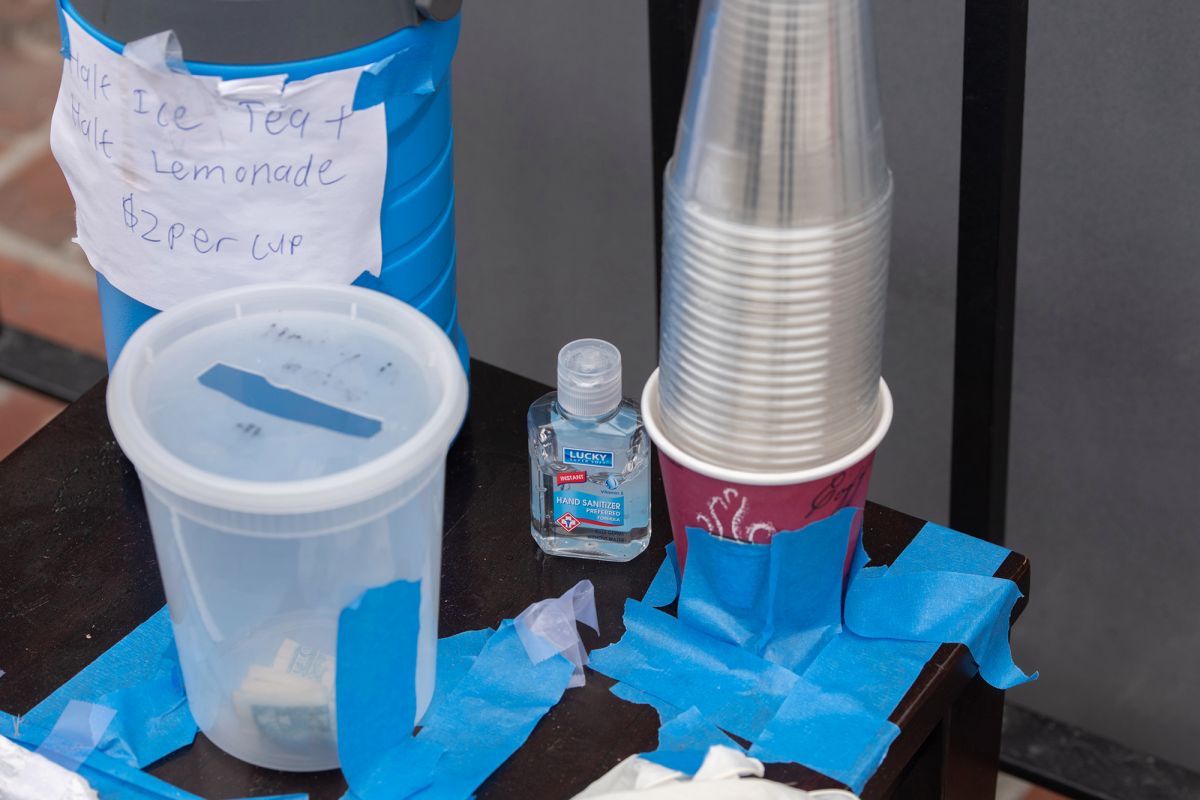
Making Lemonade
- Posted on 30th Mar
- Category: Newsletter

When coronavirus shuts down everything, you gotta do something positive. Here's a quick roundup of some generally positive, good ideas that have come out of the crisis. Some are worth copying (or paying homage) if you're looking for ideas for your own film, organization or just your free time. (Note: the photo above is from the NYPost of some kids who made a hands-free lemonade stand in NYC).

Make a Global Cloud Film – that’s what Tiffany Shlain and Ripple are doing – collecting videos from around the world where people either read a poem she selected, or send their answers to a few questions (“What is the best thing that can come to this?”) and submit their videos, which her team will edit into a global crowd-sourced film. But the deadline is tomorrow! I’ve been doing a miniature version of this exquisite corpse artistic practice with a few friends, and love the idea of getting creative on a global project. This one would be easy for other filmmakers, brands and studios to duplicate in different ways.

Montclair Film Festival and discuss it with a group – While many festivals are launching online versions, the Montclair Film Fest is going to wait and have a “real” fest later in the year. In the meantime, they’ve launched Discover Together, where each Sunday, their programmers will pick a week’s worth of films to watch from home, available on various services, and then members can follow along with the conversation in a private Facebook group. A nice way to engage existing and new members.
Filmmaker launches Theatrical at Home campaign - I know you're thinking, hey, anyone can call streaming by that name, but this is pretty genius. The filmmakers behind Phoenix, Oregon had scheduled a theatrical tour for their film, which was put on hold. So on March 20th they did a "theatrical at home" where you selected your theater and they let you stream it online for a fee, but shared the revenue with the theater where you would have seen the film. Thus helping the theaters that were taking a chance on them at the same time. Good lemonade. I'll try to find out how it went. There are now many other examples of this same strategy being put in place - or variations of it, see below for just one - but this was among the first, I think. Attend a Virtual Cinema and Support a Real One – KinoLorber was one of the first distributors to launch a program to showcase a new film - that would have been in theaters – online, in conjunction with those same theaters. It’s called KinoMarquee and you pick your local arthouse that would have been showing a film and they get a split of the revenue if you rent it online. In theory, the arthouses promote these films and both can succeed. Here’s FilmLinc promoting Bacurau this past week. We are now seeing several other distributors with variations of this idea. Distributors in China are allowing Movie Theaters to Screen some old Blockbusters and keep all of the revenues to help them re-open – Details are scarce, but ChinaFilmInsider has the article, and apparently more re-releases are being done soon to help theaters recover and get audiences back in the seats. According to some other reports I've read, while many cinemas are opening again in China, they are reporting very low box office, so this idea might help lure people back to group viewing. Might be worth doing this here when we can copy it.

SXSW and MailChimp Team Up to Present Shorts - MailChimp Presents has teamed up with Oscilloscope and SXSW to present shorts from the recently cancelled film festival. This is a great way for brands to do something innovative and fun during the crisis, especially when curation helps more than production. Deadline reports.
Film Will arthouse theaters go out of business? – that’s what many are worried about as they speak with Vice – Christopher Escobar of the Atlanta Film Fest and owner of the Plaza Theater (he took the shot here), and my old stomping grounds, says: “"If this really does last for two months, I have absolutely no idea what I'm going to do," Christopher Escobar, the Plaza’s owner, told VICE. "We're the only historic theater in Atlanta, the only locally owned theater. All of the love, blood, sweat, and tears of all the people who have done this before me is counting on me not fucking this up, and somehow finding a way to make it work." What the heck should filmmakers do about distribution during this crisis? DocNYC has a workshop for that - this Friday from 2-3pm est. DESCRIPTION: Filmmakers are scrambling for new strategies to connect with distributors and reach audiences as Covid-19 sweeps the globe. DOC NYC’s programming team has been in constant contact with sales agents, distributors and marketing consultants to gather the best advice on how to navigate these unprecedented challenges. Among the questions we’ll address: How do films recover from cancelled spring festivals? Will streamers need new content? As education moves, online, how can docs play a part? What are DIY strategies for this moment? RSVP here. DocNYC has also compiled a list of workshops and resources for filmmakers. Great start - but can every film org please create a group calendar somewhere and showcase it on each of your homepages? Might help a bit. How do you host a screening event to replace a theatrical event or tour? Together Films and PictureMotion joined together to hold some online webinars on how to navigate digital and impact during this crisis. Online every Monday at 2pm ET for the foreseeable future, and archived as well. Their first workshop covered the numerous tools available for hosting live event screenings, and the pros and cons of each one, as well as some other key tips and even legal issues to consider. It is archived at the link. Will coronavirus lead to a new "better" normal? that's what Sarah Mosses of Together Films hopes for in her last newsletter, which gives a long run-down of the many ways things have changed (like less emissions, republicans becoming socialists, etc.) and how that could be a change for the better. Windows are even be shortened in France – In France, windows – the time between theatrical and VOD – have been enforced by law, with most films needing a 4 month window and smaller films required to keep to 3 months. But as part of their COVD-19 response, the government has allowed distributors to shorten windows. ScreenDaily reports. I predicted shortened windows would become a new norm a few weeks ago, but this is big news. How much has the quarantine effected viewing of films and TV?HBO/Now/Max has a small report. Among the interesting data-points: "We’ve also seen tremendous growth in movie viewing, with engagement this past week growing 70% from the four-week average." MISCELLANY: Arts orgs – keep marketing during the crisis! That’s the very strong and good advice from Colleen Dilenschneider in her blog, KnowYour Own Bone, and in her latest article, Why Marketing Matters During COVID-19 Closures – Key Factors to Consider. She uses excellent data to show just how much more expensive it is to re-gain a member/subscriber in her other article, The Cost of Cutting Marketing Budgets in Cultural Organizations. It can be hard not to cut marketing when you’re in a crisis and likely cutting staff and wondering if you can stay open, but the data is clear – keep marketing (but change it to reflect the times, which she discusses). (h/t on this one to Andrew Rodgers, who sent this out to many film fest folks recently). Rotterdam's Philharmonisch Orchestra recorded Beethoven's 'Ode to Joy' -in isolation, but as a group- and then the Colorado Symphony did the same thing. In a very Kutiman-esque style, showing that as Colleen suggests above - you need to keep marketing as an arts org during this crisis. And it can be quite creative. Here's Alvin Ailey doing something similar on Instagram. Is the NYT bad for democracy? That’s the question asked by Chang Che at Quiellette, noting that perhaps a rising tide doesn’t lift all boats, and that as the NYT increasingly owns more of our news and media consumption, perhaps we should think about the downside of this monopoly, and what it means for a diversity of voices and news sources. I Lost my Gig - Support for Austin Gig Workers - some folks put together a website where gig workers who lost income from the cancellation of SXSW can post their lost wages, and folks can donate. It's for Austin-locals only, not the thousands of others affected from across the world - but it's already above $4 million in losses for 750+ people. Donate now, if you can. -
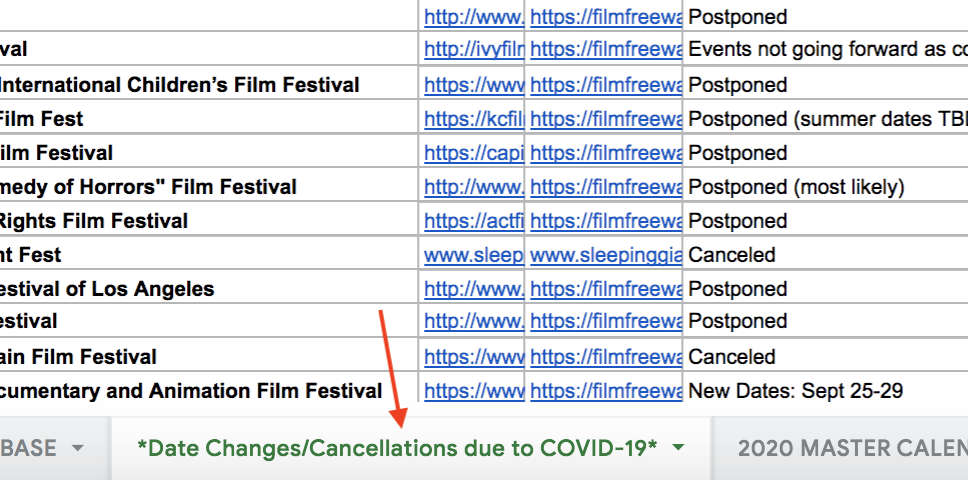
Ideas for responding to Covid in the Film Industry
- Posted on 19th Mar
- Category: Newsletter

We’re just barely into this coronavirus situation and I think we can all agree it’s gonna get worse before it gets better. While the world needs optimists, it also needs realists, and I’m in the latter camp, feeling pretty sure this is going to last much longer than a few months. But whether this lasts 3 months or 18+, the impact on our world is already huge and the film world needs to think big about how to respond. Here’s just a few thoughts that have crossed my mind this week in regards to how we should respond, in no particular order, and definitely not trying to cover every facet here...
We need to experiment with new distribution models (and need grants for them) – Nearly every call I’ve had with clients (indies and brands) this week has been about how they might distribute their films in a world without film festivals, without theaters, and no clear sign of when the situation might get back to normal. But everyone seems paralyzed with fear of the unknown. Everyone talks about using the power of the web and social media to reach and engage audiences, but no one is willing to try new models to go direct to the audience online because so much (investment, pride, etc.) is on the line. But people need to stop hoping the old system comes back soon and start building new models now. If you are a brand – guess what, you don’t need festivals or the system – you can build a new model and market it yourself. If you are an indie – by the time things get back to normal, your film may be old news, and it may be too late to recover. Start experimenting now. That said, if you are a funder or nonprofit supporter - We need substantial grants - $150K and up to producers and/or indie distributors willing to experiment with some new models, asap. Funders need to give living support for filmmakers, especially producers – Almost every grant that exists is for specific projects and/or for directors. I’m not saying to get rid of those (although I’ve argued for that before), but right now we need to help filmmakers pay the rent and survive. We need unrestricted living grants. Sure, philanthropists can require some deliverable at the end, but it shouldn’t be tied to the completion of a film. And these grants need to be extended to those always overlooked – producers. Without producers, directors can’t make their films. And producers scrape together a living now as-is, but that’s even harder when nothing is getting made. So we need money for both. And yes, of course, we need to prioritize historically marginalized groups in this giving as well. Help others, but don’t expect any help – Yes, we need to be altruistic and help others during this crisis. But we also need to realize – as indie filmmakers – that no one is coming to our rescue, and it’s time we take our survival into our own hands. Too many filmmakers who have films in development, and/or films that just had a premiere cancelled, tend to wait for the “system” to work out for their film. They wait for festival acceptances to launch their films, and then hope a sales agent will sell it to the highest bidder. But not only has this not been working for quite some time – the system is now broken. Completely. Even people who think they are gonna put it back together in a few months are going to learn soon that most of it is gone. It’s time to take hold of your destiny and make a plan for your film that doesn’t require other people coming to your rescue. What does this look like? Well, I’m not 100% sure, and that’s why it’s called getting creative. We need to invent new systems. I am pretty sure it doesn’t involve waiting on festivals to re-arrange their schedules, or for sales agents to call you back. It definitely involves building your audience directly. It might still involve traditional distributors, but even then, it will require you to be a lot more participatory with them and your audiences. And it means moving fast, and not waiting to figure things out later when things settle down. As Richard Brody mentions in the New Yorker this week – producers who survived 1918 did so because they moved fast (see below and here). Roll ‘em Up – I’ve beensaying for a long time that we need a great big roll-up in the indie space, and I believe it now more than ever. There are going to be a lot of bankruptcies and out-and-out failures in the indie space – theaters/chains; distributors; production companies; agencies; festivals and nonprofit support organizations; start-ups and I’m betting more than one major SVOD player and/or Studio. It’s time for someone who either has money, or can raise it, to roll-up some of these players into some more sustainable businesses. Don't forget about AVOD - these platforms will soar – The quarantined world is moving to streaming faster by the day. Viewers are also getting poorer, meaning the shift we’ve been seeing to ad-supported streaming networks will accelerate. It’s a great time to own an AVOD platform, and a great time for content rights-holders to move faster into this space. Don't move too fast - because audiences will want less content in the short term than is being assumed – Everyone keeps talking about how people are stuck at home just itching for stuff to watch. Platforms and publications are curating lists for them to watch, and everyone thinks it will be a boom time for viewing. But here’s the thing- check your own gut. Are you dying for things to watch? Or are you frantically checking news, social media and reports to find out what’s going on with the virus? And to find out who among your friends and acquaintances is ok? I think it’s the latter. While we will get stir crazy eventually, I think most adults are going to have plenty to do without increasing their film/show viewership in the near term (kids will need something to do, as the crisis isn’t as real to them). Gaming has increased, but it’s much more participatory and distracting than a film/show. It helps OCD better, which is what we all have right now. Jumping into the content soup too quickly is not a smart strategy. Timing this will be hard – fast, but not too fast is the best bet. Let people catch their breath first. There’s gonna be a crisis in branded content – but also great opportunity - There’s going to be a big pull-back in investments in the branded content space. It’s inevitable as we go into an economic crisis, and no one can fault any brand that focuses on staying alive as a business versus investing in content. Budgets will be cut, and even when they aren’t – productions are near impossible to pull off. I expect we’ll see a giant shake out in this space, and it won’t be pretty. But the reasons that smart brands have been moving into this space remain sound, and I would argue are only getting more valid. Consumers will keep cutting the cord and will move even more rapidly to streaming. Breaking through the noise with ads no one wants is getting even harder. Consumers will value brands they can trust even more. All of this helps branded content. If you can stick it out and convince your colleagues to stay with their plans, you’ll also find a much less crowded space – because let’s face it, few will remain. And while quality producers/directors and talent were becoming more open to working with brands before, they’ll be even more ready now – they need the support. Platforms will also need the content you do manage to get produced, and without traditional ways to market (like theaters), they’ll value your loyal customers and marketing savvy even more. Brands in film, or moving into this space – develop nerves of steel, as you’ll need them. If you can stomach it, double down.
Is there a silver lining for finished films? Maybe. Here’s the theory – production has ground to a halt, across all media. Yet the networks, the SVODs, the distributors need product to bring to audiences if they want to stay open. They can’t buy crap just to fill space – oh wait, they can and it’s called reality tv, but that can’t get made either – so there’s going to be more appetite for quality finished product. And there’s a lot of stuff in the can that was about to premiere at festivals. Let’s hope this helps them all find a home. But this will only work if people aren’t precious and don’t wait on releasing their films for too long – because (Again as Brody also says), a lot of creativity is gonna come out of these folks stuck in their homes, and it will take all of the attention away from everything/one else that waits for things to return to normal. These are by no means comprehensive thoughts on what we should do in response to this crisis, but just a few I had this week. Love to hear other ideas from anyone who cares to share them with me - I'm easy to find.
Stay safe out there – in your homes.
Stuff I'm Reading
Film
Studios start Streaming; closing windows - Well, that didn't take long. As I predicted back on Feb 28th, the studios are already closing windows and putting many films up on streaming fast, or from the start. Universal was first among the big guns. More will follow. The NYT was among many to have the story. Vulture had a good rundown too. FastCo said, go faster.
Will CoronaVirus and Streaming be the Death of Theaters? - Some, like The Atlantic, predict this will mean the end of theaters. IndieWire thinks it just gives the studios more leverage (yes). But it won't - debt might do them in, but people will flock back when they can get out again. That said, windows won't go back to 90 days for most films, only those that are major popcorn flicks or that need sustained word of mouth.
Maybe the Film Industry is well positioned to bounce back -that's what Jim Amos of Forbes thinks - saying that IF (big if) the panic lessens by the end of Summer, we'll have a ton of product ready for screens, and a population ready to get out of the house already. It's that IF that scares me.
Lessons for the Industry from the 1918 Pandemic - Richard Brody at the New Yorker has what may be the best take on how to think about the impact of coronavirus yet - looking at “History of the American Film Industry,” by Benjamin P. Hampton (1931) he finds that the entire industry changed as a result of the flu, and the war, and only fast moving folks survived. Hampton notes (quoted by Brody): "The producers who hesitated lost ground in the struggle that was shaping its lines for the final test of industrial survival, and those who disregarded common business prudence and rushed ahead on a showman’s hunch saved their skins.” Lots of great thoughts here.
Nielsen released a report on the increase in viewing due to past crises in the US and the coronavirus in South Korea and Italy - and guess what? It goes up. The study shows close to 50% increases in viewing during past crises such as Hurricane Harvey, and around 17% in South Korea recently and 6.5% in Italy. Me: To be expected, but as the rec/depr-ession hits soon, we will likely see the viewership switch to the SVODs specifically, and more cord cutting from cable as people cut back on what bills they pay. What's a Doc Filmmaker to Do when fests get cancelled? The D-Word has the debate going on now. If you aren't a member of D-Word, you must join, but it's free and worth joining for many reasons. Right now, they are debating, discussing and solution-izing around how to handle covid-19, on the thread - How do we adapt? They might just figure it out.
Filmmakers Try to Figure out what to do when every Festival Cancels - NoFilmSchool talks with several filmmakers - including the director of a film I produced (Cas Nozkowski of The Outside Story), and two who are clients (David Alvarado and Jason Sussberg of We are As Gods) to figure out what people do next.
Need an update on Fest reschedule dates/cancellations, online versions? - The FilmFestival Database has you covered. In his new newsletter, Mike Forstein explains how he has updated his database with new dates, cancellations, etc. I have a feeling this is going to go more haywire than anyone thinks, but it's a good resource (still) for now. (That's a still from his newsletter/database at the top of mine above). And if you need another list - this one from the FreeTheWork folks has a list of all of the rescheduled fests, as well as which ones are still taking place online.

What are all these theater employees gonna do to make ends meet? Well, some folks started a fundraiser to at least try to get every movie theater worker in NYC a check for $600 bucks. That's a start. Contribute to the Cinema Worker Solidarity Fund here. H/t to Dear Producer which is a great newsletter which led me to this link, and that same link has other resources for artists in need during this crisis.
MoviesAnywhere's new ScreenPass let's users share films with friends - from your "digital locker." Up to three users for 72 hrs. Via the Verge. Reminder - if you pay for it, you should own it and be able to do whatever the f-k you want to do with it. This "sounds great" idea is more copyright-overreach-rubbish.
Why are users flocking to Contagion films now? (and why curation might not be a great idea right now - The Guardian's Charles Bramesco reports on how viewers are doing some exposure therapy. But more importantly for everyone curating lists of what to watch at home, he has a great point: "But I’d contend that there’s a faint futility to analyzing apocalypse viewing of any sort, because when something occupies as much mental real estate as the widespread panic of Covid-19, everything becomes apocalypse viewing. If it’s impossible not to spend every waking hour obsessing over the precarious state of the public’s health, it’s likewise impossible not to project those anxieties on to anything one might choose to watch." and ends with this, which I agree with completely: " It’s starting to seem like the only real therapy is the detached, unplugged, attention-commanding simplicity of chopping vegetables."
Branded Content
Trust is the Only Metric that Matters - Digiday has an interview with Attention Capital's Joe Marchese (pre-corona) where he brings up the importance of smart curation in a world that increasingly needs trust - "In this world where trust is eroding, the curator brands kind of become king. And I think the great example of this is Wirecutter." More brands should keep this in mind.
That's the only branded content link this week because, well, there isn't much happening in the space. Brands are figuring out how to respond to this crisis. Content should be part of that, but it understandably isn't when people are tying to figure out how to care for their employees and their customers. More in this space soon.
MISC
Reporters without Borders is putting censored journalism in the library of Minecraft - File under brilliant. FastCo reports on a project to help people in countries anywhere, even with censorship, to get access to censored journalism. A shot from their article:

TikTok is censoring ugly and poor folks - The Intercept reports on more vile social media behavior.
-
Coronavirus & the Industry
- Posted on 12th Mar
- Category: Newsletter

This is still developing, and no one - myself included - has their heads wrapped around what happens next, but I don't know how not to start this newsletter with a coronavirus update - it's all anyone can talk about. And it's impact is big for everyone, so I am not trying to minimize the bigger picture by focusing on how it's gonna change the film industry.
Everyone knows that SXSW cancelled, and left many films wondering what happens next, while 50+ people were laid off. Someone started a GofundMe page for service workers in Austin, which isn't a half-bad idea. SXSW announced they didn't have insurance, and then we learned that not only does Cannes not have insurance for cancellations by virus, but that they recently turned down an opportunity to buy it at a cost of just 6% of their premium. Talk about hubris. And crazy...although as I'm about to press send, Cannes tells Le Figarothey might cancel if things get worse. (they will).
Meanwhile, Stage32 announced that they'd be screening SXSW films on their platform for buyers, agents and other industry. IndieWire and a few other outlets announced they'd cover films from SXSW as if they had played (as long as the producers are ok with that). But everyone I know is arguing whether this makes sense, given that most press care about premiere status and word of mouth. And while we all know buyers can honestly form an opinion with a Vimeo link, how do you get their attention away from a festival? I know that at least one VR company was known to be contacting festivals, offering that they could hold virtual events in their space(s), but while Forbes thinks this can work for conferences and events, Wired just reported that using VR as a replacement for the real world, isn't working out so well, and I don't know anyone who would sell their film to buyers or the public this way (which is in itself an indictment of the technology).
Numerous other Spring festivals keep saying they'll take place, but most people in the industry that I know are counting them all out. As I write this, Cleveland Film Fest and Full Frame both cancelled. I imagine 5-10 more will follow suit before I press send. Especially the bigger ones that draw not just crowds, but lots of travelers and red carpet press lines (guess who...).
My two cents: This is gonna get worse way before it gets better. Anything of consequence will cancel. There might be a Summer lull, as happens with many viruses, but then it will hit again this Fall, meaning filmmakers and industry can't count on NYFF, Toronto, Telluride, etc. Everyone is busy guessing what happens to the films that just lost their chance at SXSW, but what happens to the thousands of films about to be hit from cancellations from every other major fest, possibly through the end of the year? Will Sundance take place in January of '21 - can they get insurance when we don't have a handle on when we might get more masks much less a vaccine? Will SXSW get a bailout from the State of Texas (Utah helped Sundance back during the recession), or try to come back by "pulling on their bootstraps?" What happens to production on all the films trying to get cast to show up during a pandemic? What happens to your financing when the stock market goes down 20%+ and your investors get nervous? And how about your insurance for that shoot? And in my branded content world - How many brands are going to stick with long-form (and time consuming) bets when sure things like commercials are an easy fall-back?
And guess what folks - this is part of a new normal. As I mentioned two weeks ago here, fundamental business practices are going to get rearranged and it's going to be terrifying and interesting to watch. This is not being alarmist, just stating the facts; and I'm thinking we should plan for these things instead of hoping they don't come to pass.
Wash your hands. Don't touch your face, and don't even think about what happens next in the film world.
Will Packer, "Hollywood Underdog" as Indie Producer role-model.
Will Packer is the Hardest Working Man in the Biz - and he's finally getting some more attention from the indie world too - IndieWire has a great interview with super-producer Will Packer, and I highly recommend it to anyone making films, wanting to make films, or wanting to know how real producers do their work. I am biased as can be here - Will and I went to high school together in St. Pete, Florida and both played football (I sucked, he was better at that too!) - he was two years behind me, so we weren't the best of friends or anything, but this bonded us when we reconnected years later in Atlanta, where he joined the board of the Atlanta Film Festival, which I ran at the time.

I'll never forget sitting in a meeting of people in Atlanta who, at that time, were trying to get a tax incentive passed (wildly successful now) and Will stood up and said, "I have a film in theaters today that has the highest per-screen average in America, yet no one here is taking us seriously." That film was Trois, and he marketed it so well that Sony ended up hiring his company to market and distribute the films they bought from him later. His early films are case studies in how to market indie films to a "niche" (scare quotes because the audience was huge), underserved audience. And he still does this today, telling IndieWire, "I’m also involved with the distribution, the marketing. If I pitched it, if I oversaw the production and got it made, how can I then just turn it over to people and then say, “All right, now you go sell it.” Amen - and I wish every producer said that.
He worked his way up to being one of the most successful (if not award winning) producers in Hollywood, and as he explains to IndieWire, it took forever for the industry to pay attention. Well, they pay attention now. What's his formula for success? Another quote that I wish I heard from every producer: "It is: What is the audience, where are they, what are they into, what would resonate with them, what’s the marketing? Then I do a cost-benefit analysis, because if I think the audience that I could realistically reach is not worth the effort it would take to reach them, I probably won’t do that project." (emphasis added). Read the interview and follow his lead.
While Will would admit his films are very commercial, he is the epitome of indie producer and it's mind-boggling to me that he isn't on the board of more indie film organizations today.
Stuff I'm Reading
More Film News
AMC Theaters has hired a new chief of strategy, to help negotiate with SVOD players, among other things. Deadline reports, on what is probably a case of a good idea, way too late.
Roku is among the entities that could be helped by coronavirus, reports InvestorPlace, and we'll see plenty of these articles as people stay home and switch completely to in-home. As I asked two weeks ago, will they ever come back?
AT&T back to its old tricks with streaming - According to Vice they are burying fees, doubling prices after low starter fees, and all the other great things that made us hate cable in the first place. Remember, people didn't just hate the bundle, they hated getting screwed.

A new site gives you every streaming service, but on one condition: you have to watch they are watching - Buzzfeed and the Verge break down how this demonstrates what we've always known - a broken streaming model encourages piracy.
Check out this film by Justin McConnel which breaks down the life of an Indie Filmmaker - From Nofilmschool. I haven't seen the full film, but people say it's what you should learn about in film school, all in one little film. The trailer makes it seem pretty informative.
Branded Content

BrandStorytelling launched its first Honor Roll of six individuals who are driving branded content forward. The Honor Roll was launched at this year's BrandStorytelling conference and there's a great write-up on the awards, who was honored and why over at Forbes. The Chicago Bulls are the first NBA team to embrace Tik Tok through Branded content: Front Office Sports breaks it down. They won't be the last, and more brands- and events - should follow the lead. From the article - “The partnership with The Bulls and BMO Harris is a great example of how sports teams can create engaging and fun content with their sponsors,” Levin said. “We encourage and empower our partners to work with their local markets to bring value for their sponsors.” Influencers are finding innovative ways to separate their brand from other brands they're collaborating with - Digiday has the story - and its essentially about inserting commercial blocks to notify you of sponsored posts. MISC Virtual Reality For Good Use Causes? Forbes has the rundown on some "use cases" of VR for social good. I remain skeptical, but this has some good ideas. Thinking of starting a podcast? Everyone is, and (my sometimes lawyer) Alan Baldachin has a great post on what he's learned from a year of hosting his podcast, The Medium Rules, which is also a great podcast to watch/listen to about long term media trends. A seventeen year old High School student created a website that gives the most up to date info on Coronavirus in an easy to read format. Check it out

- About
- Our Services
- Differentiation
- Clients
- Team
- Contact
Learn more about us, our films, the services we provide for brands, and what makes us different.
Get updates and read Brian's weekly newsletter about film and branded content.

- About
- Our Services
- Newsletter
- Clients
- Past Newsletters and Blog Posts
- Contact
- Privacy
- Terms
- Powered by Assemble
Learn more about us, our films, the services we provide for brands, and what makes us different.
Get updates and read Brian's weekly newsletter about film and branded content.