-
Sub-Genre News, Predictions for 2019 and more news you might use
- Posted on 3rd Jan
- Category: Newsletter
Ten Predictions for 2019

- Mergers & Acquisitions: 2018 was the year for big mergers like Disney & Fox and AT&T & Time Warner, and 2019 will be the year for interesting M&A action in the lower levels of media. My bets for acquisition: IFC Films, A24, Neon, KinoLorber, First Run, Alamo Drafthouse, MoviePass (it’s not dead yet, and has a lot of good data, see below) & Magnolia. You heard it here first - one or all of these will be bought by someone (likely not the same someone), and I just don’t know by who (yet). One great new acquisition was just announced - PictureMotion and Film Sprout - and I expect many more.
- Netflix will buy a theater chain. Netflix tried to get Landmark, but Mark Cuban jacked up the price (and it went to Cohen Media), but this year, they’ll get serious, so they can lock in more talent and more press. I thought it would be Landmark or Alamo, but perhaps someone bigger?
- Amazon will buy MoviePass, Merge it with Prime, and offer the best mix of online and real-world cinema going for one low price. Ok, they may just launch this service without buying MoviePass, but with it, they’d get a lot of data and a head-start;
- Failures: As the economy gets shakier and crazier, things will start to shake-out and a lot of people carrying too much debt, or too little business model will die off in 2019. I don’t want to single out anyone for this honor, but I bet we see many OTT channels/providers hitting the scrap heap, a clearing out of all of these short-form “channels” that no one is watching, and a few film entities that don’t merge will end their runs in 2019. Unfortunately, I think the downturn will hit sponsorships, which will seriously hurt if not close a few great film festivals (that’s 3 predictions in one, btw);
- New Models: In 2018, the talk of the town was - “WTF do we do if Netflix didn’t buy us at Sundance?” And no one had an answer. As Netflix continues to focus on originals, which means less indie acquisitions at the fest stage, we’ll see more creativity around how to finance and release films, especially documentaries. Back in 2016, Roco Films helped launch the International Buyer’s Coalition to counter Netflix’s might (pooling resources to buy films for international public television), and I think a few more of these new business models will be launched in 2019. My hope is that we’ll see more collaborations between nonprofits/fests and distributors around audience-building, because that (and curation) are what we need most now;
- Diverse Voices: Thanks to a stellar year for diverse cinema in 2018, we should see more investment in diverse voices for 2019 - an ongoing change that should only continue for quite some time. But I’ll go a step further and say that one of 2019’s biggest media investments will be in a new venture to fund and bring more diverse voices to market - something like the 2017 launch of Macro, but maybe bigger.
- #MeToo Continues - yes, more revelations and reverberations, but just as importantly - more initiatives to address gender inequity behind the camera, in front of it too, and in the stories being told. Like diversity, this is a trend long-overdue and sure to continue. As a branded content person now, my biggest hope here is that Brands start to take this more seriously in finding creative voices for their content;
- More Brand Studios - Every year, I talk about the rise of branded content, but I think this year will see a few more brands get serious and launch dedicated branded content divisions, and finally capitalize them right and also own their distribution and marketing (as opposed to just partnering with a distributor, YouTube or Facebook).
- More Blockchain Platforms, with less success - Last year at Sundance, I met with at least ten different groups promising to launch blockchain enabled platforms for film distribution, and a few did launch, but more will hit in 2019. While 1 or 2 might score some press, I predict most will die as they remain focused on a problem that doesn’t exist - just making a new version of Netflix powered by Blockchain, instead of things that might work, like back-end rights management systems for existing providers. But if any of them want to succeed, do this - take ½ of whatever your total budget for the year is and re-dedicate it to consumer marketing, because all y’all got an awareness problem first.
- A Stellar Sundance - The economy should still be strong enough through the fest, and lots of players have open wallets looking for films. Netflix will be less active, but Amazon and others should be more active. The lineup looks great, and we should even see some (more) acquisitions of New Frontier stuff - VR and AR, interactive and mobile-first entertainment (and I don’t even have a grasp of what’s on offer there yet). In addition to acquisitions announcements, I can’t wait to hear some press confirmation of some of the ideas above - mergers and new models in particular.
What I'm Reading- Film:
This history of the Hollywood Reporter’s founder, Billy Wilkerson, is going on my GoodReads Books to Read list asap: Hollywood Godfather: The Life and Crimes of Billy Wilkerson by his son, W.R. Wilkerson III. The review in the WSJ (may link to a Paywall) is fascinating, detailing how being spurred by the Hollywood moguls, Wilkerson started the Hollywood Reporter as a “hand-full of papers thrown over the Studio walls” and built it into a fearful source of news that the Studios didn’t want reported. Of course, it was also a religious war (devout Catholic vs. the Jews running the studios), which would lead him to another religious war later against the (atheist) commies as a proponent of the Blacklist. He also fell in with mobsters and apparently single-handedly started the battle that became the Hollywood Antitrust case, or Paramount Decree, leading them to divest of their theaters (which is currently being reviewed for repeal). Good and bad, this guy did a lot, and the Hollywood Reporter marches on. Reading this review, however, made me pine for the days when the Trades actually reported news - you know the stuff not sent in a press release -instead of being mere industry promo-tools, which is all they are now.

Is it the end of Netflix’s Golden Age? Don’t count on it, says me, but maybe so, argues Mark Sweney in the Guardian. And he has some good points - it’s getting more expensive for them to license content, they need to focus more on international growth and everyone else has finally woken up to streaming. But Netflix has beat the negative prognastications for many years, and my bet is that the upstart rivals will have a harder time winning back customers than Netflix has in keeping them happy.
File under Kitchen-Sink - which is apparently AT&T’s strategy for the future, according to DigiDay. Faced with cord-cutters and the decline in advertising, AT&T will try a bit of everything to maintain dominance. My take - it will make for a fun 2-3 years before the inevitable death of these ideas.
Maybe we just need to be watching films more slowly, which is what the new Very Slow Movie Player does. It plays one film at 24 frame per hour. TechCrunch has the report.
[caption id="attachment_1354" align="aligncenter" width="300"]
 Photo via VSMP[/caption]
Or however the fuck we want: Bilge Ebiri has a year-end post about many things cinema for Slate where he admits some of his best cinematic viewings were off old, 10th generation bootleg VHS tapes. But noting that the big streamers seem to not just want to privilege their method, but kill all others, he asks the obvious question: “So you guys tell me: Am I just a privileged fuddy-duddy hanging on to the outmoded ways of his youth? I want Netflix and Amazon to exist, and I want movie theaters to exist, and I want Blu-rays and DVDs to exist. Do I ask the impossible?” Me: Nope, they’ll all exist - but not every movie will exist on each format, you and every cinephile will be stuck watching all of the above to watch what you want, when you want.
What I'm Reading - Branded Content:
CNN Builds New Year’s Eve Ad With Lots of Spin:, CNN offered robust sponsorships of their countdown clocks and various other graphics over their coverage of NYE, reflecting a changing paradigm within televised news; where before it might be considered unethical to present logos of outside companies during news coverage, branded content is now fully embraced in the newsroom. While it’s not hidden at all - you could tell what was sponsored - it does show that nothing is sacrosanct anymore when it comes to finding revenue to keep the “news” beast growing.
The Betches started as a blog, but is now a branded-content funded, media empire. Forbes reports on how they did it, and how it works. From the story: “Betches' revenue is predominately earned from brand partnerships that include 360-degree strategic campaign conceptualization, video production and execution, branded social and digital assets and artwork, experiential event marketing and influencer activation, according to their advertising page, which also states that Betches had 2 billion impressions, more than 6 million users and 155 million video views per month.”
AdAge Wraps up the Best Ads in Film & TV for 2018, and I can’t disagree with their top-4 for ads, but it could use more from the actual branded content side. But there’s a few good ones here.
What I'm Reading - Net, News, Media and Culture:
In the end of the year rush, I forgot to link this nice little article from The Verge detailing how the new AT&T could “bully its way into streaming domination.” Can’t beat Netflix at the content game? Just throttle them, give preferred access to your own channels and content. As former FCC lawyer (and Public Knowledge founder) Gigi Sohn says in the article: ““The repeal of net neutrality — and more importantly, the abdication of the FCC’s duty to protect consumers and competition in the broadband market — ensure that AT&T will have carte blanche to discriminate in favor of the video content it owns.” And Ajit Pai is too busy drinking from his gigantic mug to give a fuck.
Is the future of media likely to become even more partisan as the ad-model breaks? Yes, says Derek Thompson in The Atlantic - but it’s a good thing. As he points out, when newspapers switched from patronage to ad-support in the past, “large ad-supported newspapers grew to become profitable behemoths, but they arguably emphasized milquetoast coverage over more colorful reader engagement.” Voter rates were actually higher under the more politicized papers as well. As the ad-model breaks and we head back towards patronage - via Bezos owning WaPo as well as digital subscribers - we’ll get more partisan news, but maybe that’s actually better for us. Interesting and quick read.
-
Thinking about the future of Media and other Sub-Genre News for Dec 20
- Posted on 20th Dec
- Category:

I normally run a predictions for next year article around now, but unless I get inspired by next week, I am plum out of thoughts about the future after reading this NiemanLab super long set of articles on the future of journalism. There are so many great articles here that I can’t even read them all, or even list all of my favorites - I guess curation/editing is the future, not the present, of prognostication.
But the future of journalism overlaps with the future of film/video/media a bit, and of democracy a lot, so take a moment to dive into this one. Among the better reads:
- Latoya Drake on the need for more diverse voices in podcasts, which applies to everything else too;
- The Subscripton-pocalypse is coming - says Brian Moritz - this is about news subscriptions but it’s true for SVOD and OTT as well;
- Patrick Butler argues that news organizations/platforms need to start measuring impact - I agree, but this hasn’t gone so well in other fields (like film) ...
- Platforms (Facebook and others) will stop being middle-men and become the publishers/networks they really are. As Mat Yurow explains quite well: “these platforms will finally admit that the only path forward is to go all-in: It’s not enough to simply curate content and platforms must take on the role of creating content as well. These companies will hire (and maybe even acquire) large editorial teams to produce news, video, music, movies and more in-house — and begin to deleverage themselves from a group of publishers that have increasingly soured on the relationships.”
- Zainab Khan thinks we’ll move off social and back to publishers if they can just get the platform working right
- Jake Shapiro opines on podcasts as the slow-food movement of media, and how its bugs (no comments) are its saving graces.
But if you only read one article today, from this list or any other, make it Elva Ramirez’s take on making news more cinematic - which I think is mistitled, because filmmakers could learn from her ideas - which are to incorporate the visual styles and mechanisms of multiple new platforms to create a new way of telling stories.
As she says: “As more apps appear to make design better, and as people continue to watch Stories on a daily basis, it makes sense that consumers are becoming more literate in multimedia storytelling.”And with that new literacy (Ulmer - Electracy) means new ways of telling stories not just across platforms, but using their styles and motifs within the story. Or as she says: “opportunity to come to life in a hybrid format that borrows from documentary films, graphic design, and even social media’s visual lingo, such as gifs.” Think about it when planning what you want to create in the New Year, because she’s right.
What I’m Reading: Film
NATO proves Netflix doesn’t hurt their business: File under irony. The National Association of Theater Owners (NATO) commissioned a study of the impact of Netflix on movie-going, and guess what - as every smart analyst has been saying since streaming began - the impact is negligible (at best) and that actually, those who stream more also go to more movies. Guess what? This is also true of piracy. People who love movies watch them in all kinds of places, and if they can’t find them in theaters or legally online, piracy is just another simple way to find them. I’m sure half my readers won’t believe this, but studies keep showing it’s true. And since the main reason we’re windowing things (which is what leads to piracy in the first place) is supposedly because of the threat of streaming, perhaps we need to rethink this whole paradigm and start making it easier for people to watch films when/where they want, and now.
But what we really want to know is: Which streaming service has the most content? And the best content? Well, ReelGood (a universal streaming queue, who ever thought of that?...) has two great data-sets to show whether Amazon, Netflix, Hulu or someone else wins these wars for now. Note: the most important data in the study is that Netflix is culling its catalogue every year, and getting more curated and less universal.
 Sundance Rules the Docs: The Academy of Motion Pictures and Sciences have released their short-lists of semi finalists in several different categories. In the Documentary Feature category, and it’s a great list, David Courier of Sundance pointed out that ten out of fifteen movies nominated World-Premiered at the 2018 Sundance Film Festival:
- Crime + Punishment
- Dark Money
- Hale County This Morning, This Evening
- Minding the Gap
- Of Fathers and Sons
- On Her Shoulders
- RBG
- Shirkers
- Three Identical Strangers
- Won’t you be my Neighbor?
In addition, three other documentaries were helped/developed through the Sundance Labs and Programs:
- Charm City
- The Distant Barking of Dogs
- The Silence of Others
That’s 13 out of 15 - more evidence that Sundance rules the doc world. And two of the ten shortlist docs were Sundance premieres: A Night at The Garden and My Dead Dad’s Porno Tapes. Kudos to them and the filmmakers. And while this doesn’t prove you should give up hope if you aren’t in the Sundance club, it sure does make it feel that way for now, but I’d look at it as inspiration to keep making work, because they eventually find the best. What I also find interesting/funny - the buzz last year at Sundance was that it was a weak year for docs, which was so clearly not the case. I guess people just had altitude sickness.
Youtube Year in review: Youtube just released their annual Rewind video in which the platform appears to reminisce and reflect on the past year in user generated content. Controversy has brewed, however, over the video’s failure to acknowledge some of it most popular (and controversial) content.
But here’s a more accurate title of what we should call Youtube’s past year: demonetization. Which is what YouTube keeps doing to its lifeblood - creators - in trying to make a safe space for advertisers. It’s a bit of a long read, but really sums up why this year’s white washed version of Youtube’s year is antithetical to what Youtube was and should continue to be. As author Julia Alexander explains in Polygon:
“Demonetization is the story of creators fighting to keep earning money for creating videos, and the constant fight YouTube gives them to continue doing so. Demonetization is creators asking YouTube to continue letting them create weird, funny and informative videos for a platform that isn’t beholden to anyone except the people who watch their videos — the very thesis that launched the platform in the first place.”
What I’m Reading: VR
I remain a skeptic of VR for entertainment and story-telling (for at least ten years), but here’s a slew of interesting links about how VR is gonna be HUUGE with: Christians, Wine-Geeks, Court rooms, and Hospitals and Architects, not just film festival programmers.
-
Quibi: The future (death) of online video and more Sub-Genre news for Dec 14, 2018
- Posted on 14th Dec
- Category: Newsletter

I’ve written before about Jeffrey Katzenberg’s new venture Quibi. This week, Variety held a live interview with Jeff and CEO Meg Whitman that is available as a podcast here. It’s worth a listen for both the good and the bad it portends for the future of video online, and I’m pretty sure this is one of the most important new developments to the future of online video and the web. I’m excited and depressed about it too.
Quibi is all about investing a shit-ton of money to make really great short form and episodic content, with big name directors and talent. They’ve announced deals with the likes of Guillermo Del Toro and this week, Deadline also has a report on some recent big hires, with a hint that Spielberg’s been hanging around the office. They’ve also built an app and viewing experience that will launch in 2019 or early 2020 that supposedly makes watching short form video on your phone even better/easier (more on that in the podcast).
And they are spending a lot to win the war for your eyeballs – they raised over a Billion dollars for this venture, and Jeff explains in the interview that (like Netflix) they are paying producers 120% of their budgets and up to $6-Million per hour for the best short form content in small bites (quick bites…Quibi). And they are relatively producer friendly - producers can exploit their IP on other platforms after just 2 years by repackaging it into different 20 minute segments, and after just 7 years, the rights revert to the creative team. That’s not bad by Hollywood terms.
So Quibi is making HBO quality short-form content, and paying HBO prices to make it. And they elude to this in their pitch pretty quickly. In fact, the transparency of their budgets in this interview is so astounding that I imagine it’s just an open pitch to producers – “we have an open checkbook, give us a call.”
Whitman explains their value proposition in the interview: “You leave the house every morning with a little TV in your pocket. It’s called your smart phone. “ (Quick aside: No shit, Meg, are you just realizing this? You aren’t inspiring me to believe you are any more “with the times” now than you were at EBay or HP! Wait, you’re the boss…uh-oh.) …”And you have in-between moments where you want to see something great... like HBO said: we're not TV, we're HBO...we're not short-form, we're Quibi.”
So the upside of all of this is a lot of money being invested to make really great stuff in a format that people seem to prefer, and with a pretty creative-friendly environment (if you are part of the 1% of top filmmakers who they bother to work with). And that’s a game-changer for the space. As their content hits the web, it will force others to compete. It means brands making short form content will have to invest more to steal attention away from Quibi. It means the NYT Op-Docs, TOPIC and others won’t be able to get away with their meager investments anymore.
In fact, you could argue that the entire history of online short-form “professional video” has been about multiple companies trying to build something out of nothing- paying too little, thinking they can build an audience with little investment. Quibi has upped the ante for short-form content platforms, and they will likely slay many online video dragons. This is all great.
So what’s the bad part?
The core problem with this venture is that it isn’t solving any problem that consumers actually have. And that’s always a bad business proposition.
People already have found their answers for that “in-between” time - YouTube, Facebook, TikTok, and other social media and online videos. Even watching Netflix on their phone, which is only getting easier and better with 5G. Yes, there’s a problem of overload – and having too much content to weed through. But no one sits around saying – you know, I just need more content to watch to fill these “in between” moments that Meg mentions. That problem has been solved.
Nope. The problem that Meg and Jeff are solving is one affecting the suits in the industry – people aren’t watching their shows. What they’re watching is still a lot of amateur content – so much so that Ryan ToysReview is pulling in $22 Million a year from advertising, as millions watch him review toys.
Quibi is a big Hollywood solution to the problem of too much content – well, if people might watch amateur video, the way to get them to watch our stuff is to pay a shit-load to make it even bigger and better, and hope we can crowd out the amateur stuff. But I think in a world where 7 year olds make $22-Million for UGC, the jury is out on whether people want more "professional" content, and if they do, it probably just means the internet has finally died.
I swear, if you listen really closely to this podcast, you can hear the internet crying, because they're talking about how to kill it.
Every new media technology has followed the same trajectory, and pundits and assholes like me have been warning for years that this would also happen to the internet (here’s me in 2007). When the phonograph was created, Edison thought we’d use it to record grandma for posterity, and it became a one way-street of everyone buying “professional” records pretty quickly. The same with radio, with TV and now with the internet and online video. In every instance, a medium made to be open and participatory became a one way street of consumption of “top quality content” by only the “best talent.”
It’s not that Quibi will one day kill YouTube and amateur content completely. What they are doing is good intentioned and not evil. But as more companies invest even more money in online video; and as advertisers want “safe” content with lots of views around their ads; and as the FCC kills net neutrality, meaning eventually Quibi will pay to be sure you get its content faster than amateur content; and as this investment kills off smaller competitors like Vimeo; and as Netflix and Quibi and others invest in originals from a smaller and smaller group of “top talent;” well, all of these little moves slowly strangle the democratic, participatory nature of online video (and indie films too).
So I guess I have a love/hate relationship with this Quibi-thing, and it hasn’t even launched yet.
WHAT I’M READING: FILM
Some people think Netflix needs to fear Disney; other’s don’t. I’m in the “don’t fear the Mouse” camp; but what’s important to me is that as everyone moves to more original content, and battling to keep the top-rated shows and movies inside their walled-gardens, none of them are fighting to keep much indie film around. This war is just gonna make those big Netflix acquisitions even scarcer.
Verizon just admitted that Oath – that’s Yahoo/AOL. has gone from a $4.8 Billion dollar valuation to just $200 Million, yes, they’re taking a $4.6B write down, and getting out of the content game. Wowza.
Bilge Ebiri wonders whether Special Effects can be Special again in Vulture. This is a long-read well worth your time. Spoiler alert: It’s all about making fake humans (you know, so we don’t need any new actors…)
TechDirt gives us the dirt on the MPAA and RIAA trying to revitalize SOPA again. This shit just never ends. As Masnick explains (and eerily timely given my above comments): “In short, here are the major copyright industry representatives, knowing that everyone's busy off fighting other fires, making quiet inroads towards bringing back SOPA, despite the total clusterfuck it proved to be seven years ago. These guys will never stop in their quest to destroy the internet as we know it, and their push to turn the internet into a broadcast medium controlled by gatekeepers, rather than a communications medium for all of us.”

Pop-Up OTT for Xmas: Yes, that’s right. Unreel is launching Christmas Zone for the holidays – a pop-up, short-term OTT channel full of your Christmas movie favorites. (H/t to Erick Opeka for this link) Ok, some favorites and a lot of public domain stuff. But while I feel OTT is mainly a losing proposition, pop-up OTT might just work better than…
Bye-Bye Fandor. Within hours of my last newsletter predicting most niche-OTT efforts will fail, in the wake of FilmStruck’s demise, Fandor announced it was closing down (transferring assets). I am not surprised, but having known many of the founders and various staff over the years (who were all amazing folks), I am sad to see them go.
WHAT I’M READING: BRANDED CONTENT
GroupNine Media (Thrillist, NowThisNews, etc.) is launching it’s own in-house brand studio, says Adweek.
PeakTV much? AdWeek has a run-down of the 5 Best shows you didn’t probably watch because you couldn’t find them. Wait, we need Quibi why?
WHAT I’M READING: IMMERSIVE
Lance Weiler and his class at Columbia published a great run-down of 52 immersive things to check out. Each one mixes storytelling, play, design and code.
-
FilmStruck is Dead, but Sub-Genre News is Back
- Posted on 7th Dec
- Category: Newsletter
FilmStruck and the Future of SVOD: Less is not More.

FilmStruck is Dead, which sucks, but it’s just the canary in the OTT-Mine.
While I was gone for a month, nearly everyone under the sun went ape-shit crazy about FilmStruck shutting its doors. I get this as a cinephile, but I also guessed it wouldn’t last too long when it launched, and amongst all the great stories about its demise (see a few links below), I think the perspective that’s missing is precisely what AT&T/WarnerMedia figured out – niche channels won’t survive in the oncoming content wars.
Less is not more. More is where it’s at and here to stay, because they didn’t just shut the channel, they announced it would be part of a bigger offering – TCM and other “niche” content will be part of a future AT&T WarnerMedia offering that features not just the Classics, but also a lot of everything else.
But that ruins the niche, aficionado experience you say? Nope. Study after study has shown that people who like Classic films, or films about any other niche, also happen to just love films and want to access a bit of everything. The most famous of these studies was Anita Elberse way back when (2008) arguing about the long-tail, and guess what – she’s still right.
If you like movies at all, you will find your way all the way back to Tarantino (cringe, I know, but I sometimes teach and that’s all these kids remember anymore), or way back to Scorsese, or even to Kurosawa, and maybe sideways to Mekas (or go crazy and find Barbara Hammer, or Gordon Parks, or…). But it’s not just about finding history; it’s that people with any taste in any subject, tend to have broad tastes. I find it easier to think about in music terms – if you like Robert Glasper, you probably also like Common, avant-garde jazz, Q-Tip, Kendrick Lamar, Esperanza Spalding and lots of other music too (they’ve all collaborated together). The notion of someone who only likes obscure Japanese noise music is just wrong – the more niche you get in your tastes, the more likely you are to also like a wider range of stuff.
And this is also true for the average Josephine. Why spend $6 bucks a month on all the obscure titles you want from Fandor, if you could spend $8-13 a month and get those plus some Disney titles. In an attention economy of super-abundance, my dollar is going to the widest catalogues, not the most “special.” Wait, what? Doesn’t curation rule online? Yes, but within platforms not between them – and this is the mistake every OTT operator is making. Including Netflix. Have a lot; have the best too. Help me find it through better curatorial tools within your site, so I can weed out what I don’t want to see, but jeesh – if my parents show up at my house and don’t want to watch Stan Brakhage films all weekend, I better have Won’t You Be My Neighbor to stop some fights real fast.
Here’s some of the better FilmStruck death links if you missed the shit-storm:
The Guardian telling us dark days are ahead.
The LA Times saying streaming will erase movie history
Deadline on one of the many petitions to save FilmStruck
Deadline on another petitionThe Hollywood Reporter letting such petitioners take some kind of credit for saving FilmStruck (ahem, they just announced their plans a little earlier, but thanks!)
Sherry Brennan of Fox in MultiChannel being the only adult in the room, telling us “only a handful of platforms can support themselves in the niche OTT world,” and breaking the news that only a small number of subscription-based over-the-top services have more than 100,000 subscribers at this point,” And most of them are churning through customers once they try the free trial period.
John Stankey explaining to the NYT that FilmStruck titles will be on a new WarnerMedia streaming service in 2019.
The Hollywood Reporter on the possible tiered costs of this new service
But if you want to really get in an argument about FilmStruck, make sure you read Katherine Groo in perhaps the most interesting take on FilmStruck of all – that it wasn’t good for movies – in WaPo. Love this: “The failure of such a short-lived service cannot possibly be a threat to film history in any way that matters. Rather, it is a crisis in the digital fantasies of the 21st century: that (privileged) people can have on-demand access to the wealth of human culture.” Or, take this: “The argument that we need immersion in the masters of film to make digital images for streaming platforms is either a category error or an effort to protect against the future — that is, to ensure that whatever is to come resembles the powers of the past. If the concern were really about access, rather than taste, privilege, auteurism and connoisseurship, the people lamenting FilmStruck might be advocating for greater funding to film libraries and archives and more experimental models of open access and public engagement. What we need is not a deep introduction to narrow “fundamentals” but a more expansive and inclusive understanding of what film is, can be and has been.” Wowza!
What I’m Reading: Film
Meanwhile, no one watches film anyways, they’re too busy watching squishies and ToysReview: While not enough people watched FilmStruck to save it, The WSJ reports on Squish Toys, and how one Holly Woodruff’s got a 49-minute video of her hands squeezing-and-releasing more than 700 squishies one-by-one that has been watched 3.1 million times. “Most fans—some of them adults—watch the videos to relax, Ms. Woodruff says.”
And nearly everyone covered the BBC’s story about seven year-old Ryan ToysReview pulling in $22-Million a year with a golly gee-whiz attitude. But what this really shows is that nearly 14 years after YouTube was founded, the world just wants to watch itself make funny videos, and has little time for what Hollywood wants to make. Seriously, YouTube has spent billions trying to get people to watch “professional” content, and people like Katzenberg are raising billions more to make “high end-quality” content, when clearly the internet has spoken, and it thinks UGC is just fine.
But if they are, they might as well just use Kanopy. Because as IndieWire reports, A24 just made their entire catalogue available for free on Kanopy – to anyone with a library card. Why are people even bothering to launch other services?
Why is gaming so absent from Film Fests? That’s what I wondered, as I read this brilliant editorial about the artistry of Red Dead Redemption 2 in the NYT from Peter Suderman of Reason.com. Seems to me that all of the “cutting edge” programs at places like Sundance, Tribeca, etc. spend a lot of time pushing VR and other interactive platforms and not gaming; yet games are so clearly the only form of current and future narrative art that are both currently working and popular. The bias against games as narrative art continues.
Release windows are shrinking? Not so fast argues Colin Dixon in nScreenMedia, who gives three good reasons PVOD (premium VOD) will fail: Disney won’t do it; box office is increasing; and theater owners still don’t see anything to gain.
Some asshole wants to shut down the Quad for noise disturbances, reports the NYT, but thank God its owner, Charles Cohen, just bought Landmark and can make his noise wherever he wants now. Seriously though, who are these fucks moving to NYC and ruining our lives when existing landmarks mess with their condo-living?
What I’m Reading: Branded Content
Marriott is going to theaters reports DigiDay. Marriott took it’s StoryBooked series to 30 theaters in 28 markets, aired it as an hour-long broadcast on FYI, and then again on A&E before making it available for streaming online through April, 2019. Multi-platorm plays are getting bigger, because only bigger breaks through the noise.
And AdWeek explains why, in a pretty good article on how brands are taking control of their narratives by making more content, longer content, and controlling how it gets to consumers.
What’s next, the article asks in summary: “Best of all, brands can target who they want to see this content across whatever platforms they choose. They don’t need to pay to shout this content across a major TV network but can instead seek out the market that wants this content how and when they want it.
It’s a new era for content. The only question now is how far will brands go. Could we be watching the Patagonia Network on our televisions soon?”
Well, given how poorly OTT channels are working out, as explained above, maybe not. But brands might have a better go at it than traditional film companies.
Maybe that’s because Branded Content makes people happy. So says RealEyes and Turner in a study they released that was picked up by AdAge. But if you read this, you may vomit. I did.
Why is this Newsletter so Late?
Sorry I didn’t post for a few weeks, but I was producing a movie, which kept me too busy to write a newsletter, and that's why this is a summary about old news. But this also gives me a chance to make a shameless plug for the great press we got in Deadline for our cast on The Outside Story, by Casimir Nozkowski, which just wrapped shooting in Brooklyn. Can’t wait to bring this film to you next year.
-
DocNYC and other news
- Posted on 1st Nov
- Category: Newsletter
DOCNYC hits NYC Nov 8-15th.
DOCNYC has grown to be the largest doc fest in the US (I don’t know how they measure this…) and it’s got a stellar line-up this year. There are a lot of films playing, but I’m gonna pitch just one for you to watch – and I’m biased because I’ve been consulting with the filmmakers for over a year now – Stars in the Sky: A Hunting Story by Steve Rinella. I am willing to bet that 100% of my little reading audience doesn’t hunt – and has probably never fired a gun and has no interest. That’s ok. You can even be anti-hunting. But Steve Rinella is not only a good filmmaker, he’s the Anthony Bourdain of hunting – he knows his stuff, knows the arguments for and against, and this film will open your mind to thinking about it a little differently. And even if it doesn’t – you’ll learn a lot about how hunters and fishers contribute to our public lands. Check it out on Nov 11th.

But to me, the best thing about DocNYC is the DocNYC Pro program – panels, keynotes/manifestos and pitch sessions. This is where you can really learn the state of the industry and put faces with names on those industry folks you want to get to know. Check out the full line-up for DocNYC Pro Here.

Mass Media Expo takes place in Boston this Saturday, and I am speaking on a panel about branded content, with my friend Rob Sheard of Zero Point Zero (producers of Stars in the Sky, mentioned above), and Megan Cunningham of Magnet Media. Both of these people are way smarter about the future of branded content than me, so make sure to come see us if you are near Boston. They’ve also got a great set of panels, including one about the state of OTT and cord cutting, and there’s also an Exhibitor’s Hall with many great vendors.
The Outside Story shoots Nov 10-30. I won’t be at DocNYC though, because shameless plug – I’m producing this great indie film at the same time. This is why this is a short post this week, and it also means I won’t be writing newsletters again til December.
What I’m Reading: Film:
There’s a glut of SVOD Channels – Milking Genre Fans, and people are getting sick of it already, reports Endgadget. As the writer points out: “So I'm spending a bunch of money on shows I don't even watch... It's basically no different from having cable. Cord cutters have long extolled the virtues of an "a la carte" model of TV consumption, where you pay only for what you actually want. Well, congratulations! We're there, and it stopped being cheap a while ago. (No wonder piracy's going back up.) Geeks might be fond of cutting the cord, but we're also quite fond of BitTorrent.” My take: this is unsustainable for customers and the folks launching these channels. I see a big shake-out in a year or two, in addition to the recent loss of FilmStruck. No one wants a la carte cable for more money. It just don’t compute. We either need some bundling of services, or this just won’t work.
The LA Film Festival is no More, and that's Great: Variety reports that Film Independent is shutting down the LA Film Festival. Why do I say this is great? I actually feel bad for the people losing their jobs, and hope Film Independent helps them find new homes, but I think it's great when an organization assesses it's situation and admits it can do something better. Kudos to Josh Welsh and the leadership team there for re-focusing on how to better serve indie filmmakers through year-round programming. As board chair Mary Sweeney told Variety: "“In the end, we concluded that the organization should explore a more nimble, sustainable form of exhibiting and celebrating independent film artists year round.” That's a great idea. I hope more film organizations take it to heart and think about what they may do differently as well (and no, not all of them should shut their fests, but some should).
-
WithoutABox Is Dead and Mixed Reality Should Be?
- Posted on 1st Nov
- Category: Newsletter
 WAB Patent
WithoutaBox is dead, reports Deadline, among thousands of others. Way back when in 2000 I was running the Atlanta Film Festival and got a call from a friend asking if we’d be a founding film festival of a new submission service. In all honesty, the staff and I assumed this thing would die off sooner than it would make our lives any easier, but it actually worked. Soon we were among hundreds of film festivals using it to streamline submissions – and then acceptances and rejections, and it was pretty cool (for a time).
At first it made submissions easier, then it contributed to a glut of submissions. Then things started going downhill. Amazon/IMDB bought it, and seemingly decided to freeze it in time with no improvements. And they could because they had Patent number US6829612, which prevented anyone from making a copycat system. Stephen Follows wrote about it back in 2013, and it's a good read if you want to understand all that went wrong with WAB.
Everyone in film knows this story well, but suffice it to say – Film Freeway finally figured out how to get around the patent crap and build a better service. WAB noticed it was losing business, and bribed many of the big festivals to keep using them, and actually made it start working again (design improvements mainly). Now every filmmaker has to keep an account with both services to apply to film festivals (among a few, small other ones), since each festival uses one or the other.
But Amazon has finally decided to kill it off. No one seems to know why. Out of all the press, I haven't found anyone who makes even a good guess. Some think it got expensive to bribe festivals with sponsorships. But Amazon is too rich for that. And it can't be the cost of keeping up the service or holding the data, when Amazon owns AWS. My guess is that Amazon figured out they were getting all of the data they need about films elsewhere, and a whole chunk of that data was just useless. But even I am not sure of why.
So Long WithoutABox. Long live Film Freeway (and the few other upstarts).
But… while I love Film Freeway, I still can’t figure out why Vimeo hasn’t taken ownership of this space? We all use Vimeo for every aspect of film viewing, why not just close the loop and become a better WAB/Cinando? That would be a service for the industry that would be a nice tidy business for them.
One can dream…
What I’m Reading: Film:
A24 Redfines the Sountrack as a Playlist: The WSJ reports (might be pay-walled for some) that instead of licensing the music (again) from studios, A24 just made a great playlist of the songs from Jonah Hill’s Mid90s. The songs are already there for free, so no money needed to exchange hands, and…earned media as well people.
What I’m Reading Mixed Reality:
Is MagicLeap and Mixed Reality a big Con? That’s what Gizmodo thinks (via Redef). Not much to add here, it's all true.
What I’m Reading: Branded Content
Robbie Bond, founder of Kids Speak for Parks, wants you to vote! This comes from Patagonia, and it’s all of 23 seconds, but combined with a great and simple website, it’s great stuff. Patagonia is taking the lead in corporations pushing citizens to vote and make their voices heard – especially in support of public lands and the environment. Kudos to them, and everyone else who is pushing people to vote in the Midterms. Go vote!
-
With Apple’s new free content, what’s the future gonna look like?
- Posted on 11th Oct
- Category: Newsletter
 This week CNBC (and probably others) carried the news that Apple is going to be making a lot of original content available for free (h/t to Sundance’s Creative Distribution newsletter for the link). While they are “only” spending $1Billion on content this year, people suspect they’ll be spending more. Later in the day of this news, I was meeting with another film executive who pondered – with consumers expecting more and more free content, can any media company not attached to something bigger survive?
I think it’s a valid question – prognosticators on Wall Street in particular keep betting that Netflix will sell after it starts crashing – and they keep getting proven wrong. But you gotta wonder – with Amazon and Apple and (eventually) Google and Facebook all being big enough to make content and give it away so you use their other services – where they make a lot of money – what happens not just to Netflix, but also Disney- even with the recent mergers – most other studios, and even a lot of broadcasters, etc. It’s not hard to imagine a world where we’re back to the Big Four, but with FAA(n)G being the last folks standing. And yes, I put the Netflix n in lower case because I am not betting against them yet, especially on their current streak. But I can see a world where they start missing subscriber growth as the economy cools globally, and then one of the others just buys the remains.
I think branded content will push this trend along faster. Right now, only a few are doing anything more serious than some dalliances. But Pepsi, Lego, and I think soon – Lyft, Red Bull and many others are going to take a cue from Katzenberg’s Quibi (which will also be bought) and start upping their game with much bigger investments in the space. And they won’t need to sell their content. They can give it away, maybe just via Google or Amazon, and will be damn good at marketing it too. It’s gonna be an interesting few years ahead.
WHAT I’m READING: FILM

Per the above, Katzenberg unveiled the name of his new service and it’s Quibi, for quick bites. Dumb name, but the fact that he could even find a 5 letter word still available online is amazing unto itself. A lot of people keep poo-pooing this new company, but I think it’s damn smart to be making high quality short form content with big name creators like those he’s announced – Sam Raimi, Guillermo del Toro, Antoine Fuqua and Jason Blum (but let’s see some women…). He’s basically doing what Vimeo could have done if Barry had been willing to invest more in the brand. Anyways, five bucks says Quibi will be a channel on Apple TV within five years.
BRANDED CONTENT
Joy Howard is the new CMO at Lyft. Ok, this isn’t branded content news yet, but I’ve worked with Joy at both Patagonia and Sonos – her previous jobs – on cool branded content, and as I’ve written before, Lyft is already doing cool things in the space, so expect to see more soon.
Advertising Week was all about original content, and Forbes reports that brands are figuring out that in a saturated media world, distribution is f-n hard stuff. Welcome to my world.
-
The Crisis in Indie Film History Viewing (and Preservation)
- Posted on 4th Oct
- Category: Newsletter

I don’t normally link to IndieWire articles because I imagine everyone who reads this newsletter also reads IndieWire already. But this week, they ran a great little story about the Crisis in Indie Film Preservation, and I think it’s a must-read for the field, but it also points to an adjacent problem with no easy solution (although I’ll propose one) – access to viewing the history of indie film online.
Chris O’Falt, the writer, does a great job of describing the problems, so read that first, and by interviewing IndieCollect and Ira Deutchman, he heard from the most knowledgeable people on the subject. But in short, the crisis is that the history of indie film is in danger of disappearing. Films shot on actual film are often degrading, improperly stored, un-findable, or perhaps worse – we might have the original negatives, but no one can figure out what company owns the rights anymore so no one can digitize and distribute it. And the situation is no better, and actually worse, for films that originated on digital because digital formats actually disappear more quickly than film (do you own a DVD player anymore, much less a floppy disc?).
I take issue with only one point in the article – he says the crisis in indie film preservation was one that “no one saw coming,” which is ridiculous because almost anyone who is active in indie film has known about this issue for quite some time, and there have been efforts to fight this problem going on for decades.
I launched a program called Reframe with Amazon and support from the MacArthur Foundation, back ten years ago (2008), and we managed to digitize and preserve almost 1000 titles, and I was late to the game back then. Since that time, multiple archives have been working on the issue, as have the Sundance Institute and now IndieCollect.

But the problem hasn’t gone away, and is arguably getting worse because it’s just not sexy for Foundations to give grants to film preservation instead of film making (side note, this proves most grant giving is just brand building, but that’s another article).
But one of the reasons it’s hard to spend the money it takes to preserve indie film history is that once you do the work, it’s impossible to make money back. As O’Falt observes in his interview with Ira Deutchman – “Netflix and the other profitable streamers aren’t interested (in these films), according to Deutchman – so the cost of preservation is a hardship.”
This is a problem that goes beyond film preservation. In the past two years, I’ve had multiple filmmakers approach me because they’ve just recently gotten back the rights to their films, and have spent the time to make quality digital masters, but have found that no distributor wants them, because no platform wants their films. Netflix won’t license most of them, and as one distributor told me this week – their only option is to put the film on Amazon Prime via Amazon Video Direct, but the problem with this is that no one rents them and the revenues back aren’t worth their time and effort.
So filmmakers are stuck with another “self-distribution” dilemma – they can put the films on Vimeo, or they can pay a service like Quiver a few thousand dollars and get them on Amazon, iTunes and some other outlets, but without a marketing budget, no one will find them, and this also takes time away from being an actual filmmaker.
There’s no easy solution to this problem. The costs are enormous and the return on investment is likely small – there’s a reason Netflix doesn’t want these films. They aren’t the villain here; they just have the data to prove that people aren’t watching them enough to either pay for them or probably even store and deliver them to the small audience that wants them.
But I’d like to propose that there is a solution to be had here, and while it isn’t easy, it’s the right thing to do. It seems to me that there are thousands of film festivals, indie film organizations, film societies and film theaters that have arisen on the backs of all of these films. Collectively, they showed these films, built an audience, and while they all have their struggles, they’ve become long-standing organizations with a somewhat stable footing. Some have become rather big institutions – IFP, FIND, Sundance, the Film Society of Lincoln Center, etc. And I’d argue it’s their (and our, as fans) collective responsibility to do something about this. There are multiple ways to go about this, but here’s just one idea. It may not be practical, but perhaps it will help start a conversation that leads to something better.
Almost all of these institutions have members, who pay monthly or annual dues and often their primary reward is discounts on tickets and an email newsletter. These members also happen to be the main potential audience for these films. I’m pretty sure that most of these members don’t think they get much value for their membership, but instead see it as their donation to help a local group they care about, and most of them could easily be persuaded to pay a little bit more if they got something in return.
If each of these organizations collectively raised their membership dues by $25 annually, this money could go to a pool for film preservation and access, perhaps managed by IndieCollect. They could then partner with someone like say, Kanopy, to provide free access to these films via their membership fee to their local organization of choice.
I’m sure the numbers here have to be tweaked a bit, perhaps it’s a bigger annual fee or $5 a month more. And Kanopy needs financial compensation from the pool as well, but it also gains a lot of users, and titles, and has more to offer to Universities and library systems who will pay hefty fees for access. And of course, filmmakers need to receive some compensation. Like I said, the potential solutions aren’t easy, but we need to think about them.
Perhaps a major foundation or three could help underwrite this as a clever joint for-profit/nonprofit collaboration. But something like this could help solve both the crisis in preservation and the crisis in being able to view these films, and take the onus off the filmmakers who are least able to deal with these problems.
Hate this idea? Send me some others, my contact info is easy to find. Like it –let’s plan for a summit, sometime, to make this work.
A Note on the Missed Week: You might have noticed that I skipped last week’s newsletter. I’ve been trying to publish weekly, but the trauma of last week’s Kavanaugh /Ford hearings was just too much and I couldn’t imagine writing or reading a newsletter. I’m 100% in her camp and he proved himself unfit for Court, but I have nothing to add to this conversation that hasn’t been said better by someone else. Just letting you know why this was delayed.
What I’m Reading: Film

Free Solo is killing it at the box office, and also deserves an Editing Oscar. Free Solo just opened to the best Doc opening ever, and the best per-screen average of any film for the year reports Variety (among others). And it deserves it. It’s a great movie that you need to see on the big screen – and due to my work with brands in this space, I’ve seen every recent outdoor film and can say this is honestly one of the best; one that rises above the norms for the field and should be seen by all audiences. It also recently won the Audience Award at the Toronto Film Festival, after playing Telluride (not MountainFilm, either) and coincident with a premiere at the Camden International Film Fest as well. NatGeo and Greenwich films did a great job here, as did the directors. But my vote is that it deserves to be nominated for Best Editing (Bob Eisenhardt) right alongside Hollywood films. I’m not even sure this is possible, but it deserves it. Bob’s editing keeps the momentum going for even the non-Climbing film fan, and even when you know the outcome. It’s truly suspenseful and very well done. Kudos to the whole team. Also, IndieWire has a great interview with Alex Honnold, the star of the film, and it’s worth a read.
My friend James notes that I haven’t commented on MubiGo – which was announced in Screen in early September, but it hasn’t gotten much traction in the US since that time, as it’s not available here. MubiGo is kinda like a MoviePass for arthouse films in the UK, where if you are a Mubi subscriber you can go to one free curated movie per week. Mubi curates the films- so it’s not the same as MoviePass, but has some similarities. You have to download a separate MubiGo app (aside from the Mubi app), and Here’s the MUBIGo FAQ page if you want to learn more. My take: I like any experimentation. I assume this is coming out of the recent funding initiatives from the BFI and the EU for promotion of European films, and it it’s an interesting experiment to follow. It could be something for Fandor and the Arthouse Convergence to explore here in the US. I’ll try to report more as I get more info (which is shockingly hard to find online).
Free SVOD Services are Growing in Importance in the US: It seems people are hitting a wall on paying for SVOD services after Netflix, Amazon Prime and Hulu, and are now tuning in to free services like Pluto TV, the Roku Channel and similar services. I’ve heard from filmmakers lately that aggregators are getting more aggressive in wanting fast AVOD rights since Netflix is buying less indie films for SVOD, and this must be why.
Netflix Adding Choose-Your-Own Adventure Interactive Features to Black Mirror and then to many other shows, reports AdAge among others. Gimmicky, yes, but interactive story-telling is (part of) the future, and that such a giant of the field is doing it already is kinda exciting. I just can’t wait til things get more interactive.
Showtime Launching Doc about the NYT’s article about Trump’s Tax Evasion on Sunday: Ok, but seriously – if Showtime cared more about the country than branding, wouldn’t it have made more sense to do an Academy run and keep this thing in the news all the way through the Oscars instead of hitting at the same time as the NYT piece? You can’t possibly tell me they couldn’t afford to hire Abramorama or that some theaters in NYC and LA wouldn’t make room for this run at the last minute?! Come on.
Blatant Self-Promotion Department: I’m distributing a new documentary called Long Time Coming which opens Oct 23rd at the SVA Theater in NYC and multiple other cities via a new system called Nagra MyCinema.
 Here’s some more info on the film: The players of the first racially integrated Little League baseball game in the South reflect on this revolutionary event, building a bridge to heal the social divide that exists in our country today. Featuring Major League baseball and civil rights icons Hank Aaron, Cal Ripken, Jr., Gary Sheffield, Davey Johnson and Ambassador Andrew Young. The film opens theatrically Oct. 23rd Nationwide, the week of the World Series. Special one-night-only screening event in New York Oct. 23rd at SVA Theatre. Buy tickets here.
ART

Via Obvious
AI Produced Artwork is Now a Thing: The “first” AI produced artwork is being auctioned at Christie’s next month, according to Recode. The French art-collective Obvious made the algorithm that made the work. The AI learned from old portraits and kept generating it’s own versions while a “discriminator” tool would keep rejecting them until it couldn’t tell the difference between man-made and machine-made images anymore. That final image is what’s being sold. I guess art isn’t what makes us human, after all. And it will come to movies next. Oh wait, that’s already been done as well.
What I want to Read: Medium:

The Big Disruption by Jessica Powell available on Medium now. When the former head of communications for Google writes a book about a fictional Silicon Valley powerhouse whose logo is a giant squid, count me as sold. Starting it soon, and hoping it’s at least half as good as Jarett Kobek’s I Hate the Internet, which is a must-read btw.
-
Sub-Genre News, Sept 13: NY Indie Guy Retrospective, Camden Film Fest & More
- Posted on 13th Sep
- Category: Newsletter
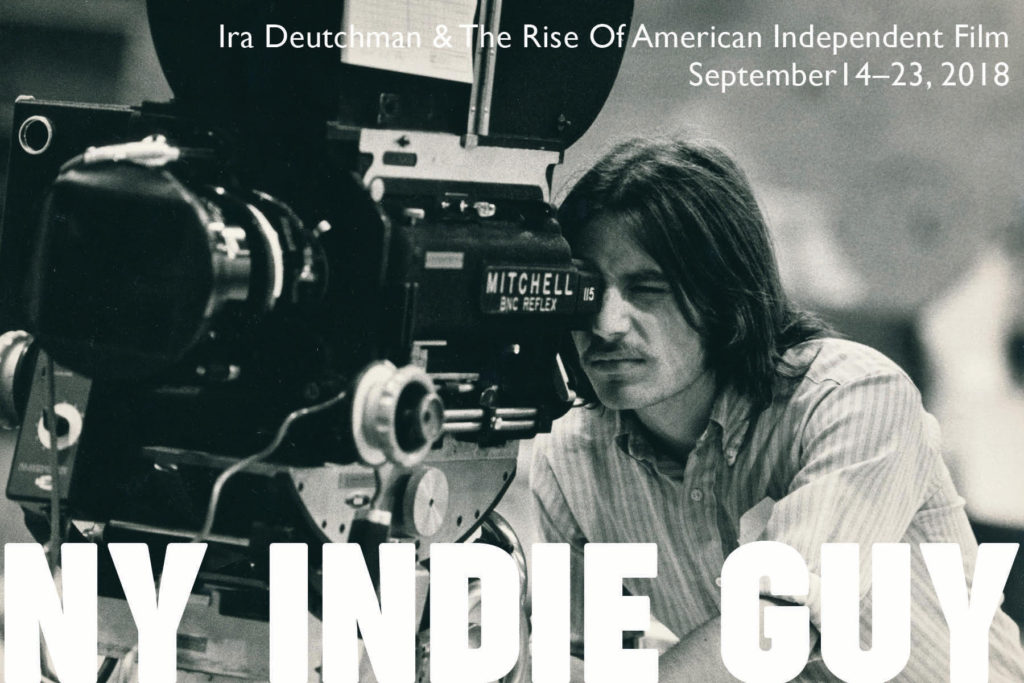
 Columbia University’s Ira Deutchman: NY Indie Guy Retrospective
In the “hey all film festivals, please-copy this” department:
From the official release: On September 14-16 and 20-23, Columbia University’s Lenfest Center for the Arts will host a retrospective honoring the film producer and distributor Ira Deutchman, one of the essential figures in the history of American independent films.
Since 1975, Deutchman has been a leader in distributing, marketing, and producing the work of independent directors like John Cassavetes, Barbara Kopple, Joan Micklin Silver, John Sayles, and Steven Soderbergh. Deutchman is perhaps best known for his work founding and running the distribution companies Cinecom, Fine Line Features, and Emerging Pictures.
To find out about films and purchase tickets, go to arts.columbia.edu/nyindieguy.
Films from the retrospective include both classics from the history of independent cinema and gems waiting for rediscovery. The celebration will also include panel discussions and an extensive exhibit covering Deutchman’s impact on cinema.
My take: When I first moved to NYC to try to break into the film business, I begged the only person I knew with any film connections to help me get some job interviews. That person was Cara White, who had co-founded the PR firm Clein + White, which was arguably the most important PR firm of that time in indie films, and she introduced me to three people, and one of them was Ira Deutchman, who was then running Redeemable Pictures.
I grew up traveling an hour from my home in Seminole, Florida to the little St. Pete Beach Theater (now closed, but there’s a movement to try to re-open it) to watch many indie/arthouse films that had the logos of the companies Ira had worked for/or run/founded on them, so that first intro was like being introduced to a bonafide celebrity for a film geek.
His tenure at Fine Line (1990-95) roughly overlapped with my time in undergraduate film school (89-93), and includes some of my favorite films, which were their own little film school: 1989’s “Sex, Lies, and Videotape” (Steven Soderbergh); 1990’s “Metropolitan” (Whit Stillman); 1991’s “My Own Private Idaho” (Gus Van Sant); 1992’s “The Player” (Robert Altman); 1993’s “Short Cuts” (Robert Altman) and you can’t not mention 1994’s “Hoop Dreams” (Steve James). And he worked on many more – too many to mention here.
While I’ve never asked Ira if he remembers this, he did take a phone call with me briefly, even though he had no openings, and that was pretty nice of him because I had very little experience and he was a busy guy. Over the years, I was lucky enough to have many more phone calls and conversations with Ira about the indie film business, and these all shaped my understanding of the field immensely. He taught me indirectly, by way of example: that indie film has always been a crazy business; to support work that you love; to give back to the community via teaching; and most importantly, to keep innovating, which he always did through the companies he launched, and he continues to do with the film work he’s producing/directing now (more news on that should come out soon).
When I’d complain about the state of independent film exhibition, he introduced me to the leaders of the Arthouse Convergence, so I could learn what was really going on there (a lot), and what else was possible. We’ve also brainstormed many distribution ideas together – and he’s helped me kill many a bad idea before it went too far. We’ve been on more than a few panels together at film fests, and I’ve listened to more than one of his keynotes, and he’s always one of the smartest folks in the room when it comes to thinking about the art and business of film.
If you are in/near NYC or can get here, the retrospective is a must-attend event. I especially recommend the “Conversation with” panel, where you can hear from him directly about the past, present and future of the industry. They also have 3 other panels scheduled on the current state of the field, Ira’s contributions to indie film, and the crisis in film preservation, that are all great events. Plus some of the best indie films of the past few decades will be screening, with many guest speakers.
This is a program that I truly hope inspires others to copy it – I’d love to see a smaller version of this film series and panels travel to Sundance and to regional film festivals near and far. So programmers/organizers: take note and copy away.
What I’m Reading: Film
In the who has extra money for this crap department, The Wrap bought VideoInk, and is turning it into The Wrap Pro. This is so all kinds-of-expected-but-weird. My only hope is that the unnamed strategy here was an acqui-hire of their designers, because you couldn’t pay me to try to read The Wrap’s graphic design. Which is kinda sad, because in theory, I like what Sharon Waxman seems to want to build here with an in-depth news site, deeper dives via subscription and events to boot – but without a much better user-case than “ some accounts-payable team will pay for this” strategy, I don’t see why I’d fork over any money for this instead of the other trades and existing paid subscriptions that overlap enough for in-depth news, like The Information. The problem in this space is that it’s hard to bite the hand that feeds you, and fewer in film media are willing to do this than in perhaps any other space in journalism/advertising (again, here, they are almost always the same).
 I’m off to moderate the Points North Forum Pitch at the Camden Film Festival, for the umpteenth time: I’ve been doing this for who knows how many years now, and it’s become one of my favorite duties each year. I get to moderate a panel of about 15 film funders as they take pitches from six teams of documentary filmmakers who pitch for seven minutes and then get 12 minutes of feedback from the panel. Some people get money, most get made and all of them get great advice; and it’s one of the rare pitching forums that allows the general public to watch, making it quite a fun event all around. Besides that, the festival has awesome programming, a stellar team, a beautiful, destination town, and just might throw the best film festival parties, which is saying something since most festivals take their party programming as serious as their films.
What I’m Reading: VR
Forbes looks into the future of VR in retail and consumer experiences. Visiting with LucasFilm’s ILMxLABs, they look at everything from the future of virtual pets, to re-visiting the place where you got engaged – all in service of hyper-consumerism. Some interesting stuff here, if we ever get past the current bad-360-video-land and into the future.
What I’m Reading: Branded Content
Mattel has launched a film division: And they hired a great person to run it, Robbie Brenner, a producer of Dallas Buyer’s Club among many other things. But as Forbes reports, Mattel has been screwing up a foray into movies for a long time, and the company’s not doing so great. So this hail mary pass may not lead to a win anytime soon, but let’s give her a chance to do something cool with the brand.
BrandStorytelling interviews Kari Kirschenbaum from Oath’s RYOT Studio about their work promoting MOTHER. (video link). She talks about how they worked with digital graffiti artist Insa to create a giant AR/interactive film poster and experience in London, which led to ancillary video content that was viewed over 57 Million times to help promote the movie. An older campaign, but a pretty cool activation.
Beer Lovers Rejoice: Heineken and NatGeo have a new short-form text and video piece about the discovery of what they call the “mother” yeast in Patagonia, and they’ve turned it into some beer and content. My take: I’m not a fan of the brand’s signature beer’s taste, but love that they sponsor film fests and branded content, and am skeptical of branded science, but it’s a kinda cool little short about finding an undiscovered yeast – supposedly one of the missing links to the beginnings of all yeast – and turning it into a beer, and it fits the NatGeo mission, so it’s a (little bit of a) win for both.
Nike’s sales went up 31% after the Kaepernick Ad ran, says Time Magazine. As I said before, that was a smart move.
-
On not Submitting to Sundance next week, and other post-vacation news
- Posted on 6th Sep
- Category: Newsletter
On Not Submitting to Sundance next week:

Next Friday, September 14th is the official, public deadline for all projects to submit to Sundance (unless you asked for and received an extension). Which means just about everyone I know in the industry is rushing like mad-folks to finish a rough cut of their film that is good enough for Sundance.
Up until a week ago, I was doing the same, with an unnamed team of filmmakers on an unnamed project. But then we realized we just couldn’t finish a good cut of the film in time for the deadline (even if we had an extension), and that there was a good chance we wouldn’t have the best cut possible for the festival in January. So we pulled the plug, slowed down, took a deep breath, and… it’s the smartest thing we’ve done, and I encourage more of you to do the same.
I’ve been involved in some manner with at least twenty, if not 100, films that have rushed to get a good rough cut submitted to Sundance by the deadline. And a few of them have gotten in and done just fine. But I’ve also seen way too many that not only didn’t get in, but had no business trying with the cut they had by the deadline, and I think it’s a mistake to succumb to the pressure. Heck, I see at least 3-4 films at Sundance that aren’t ready for viewing and feel like they need a few more rough cuts, and that likely would have performed better if the filmmakers had just waited for another festival.
You only get one chance to put your best foot forward, and you’re doing yourself no favors by submitting something that was rushed and not ready for prime-time.
Sure, you still have time to make it better before the festival, so why not give it a shot, you might be thinking. And I’ve been part of teams that had films accepted into a festival (not Sundance) based on a rough cut of just a segment of the film (yes, that also happens), but far more films are rejected because they weren’t ready than are accepted on a bad rough cut. Remember, Sundance isn’t the only great festival out there (I don’t need to name the others, we know who they are), and with the current changes in the marketplace, you could even argue that you might end up showing the film to buyers before a premiere elsewhere. You have lots of opportunities, but only one chance to premiere the best film possible, and no one knows you’re even close to done yet, except for you.
We all thrive under pressure and deadlines, or we wouldn’t be in this business, but most films need a lot more time in post than anyone budgets for, and your film will have a better chance of getting in, and then getting seen and brought to market, if it’s as polished as possible.
If your edit is really tight, and you’ve locked in most of the story and just have finishing work to be done, then by all means – submit by next Friday. But if you’re debating whether your cut is ready, it probably isn’t, and my recommendation would be to slow down.

End of Social Media and Newsletter Writing Vacation:
Every year, I take a break from all social media for the entire month of August and until just after Labor Day. And this year, I paused this weekly newsletter as well. I’m back from that vacation, but I am not back on social media. As I have hinted before, I am finding that I don’t miss Facebook or Instagram at all anymore, and have no interest in Twitter or other platforms at all. I have to use them for client work – part of my job is marketing films on these platforms because that still works (as of this moment, but it’s getting less effective daily); but in my personal life, I’ve found that there’s no news that I need to know about that doesn’t eventually make it into the NYT, trade publications, and/or a few other newsletters I read (Redef and Unsupervised Learning being my current faves). The updates I used to love from friends and family have been drowned out by the vitriol that’s taken the place of normal discourse. I’ve also found that every second not spent online is another moment I can use for something more meaningful and creative, and I’m much happier, so I highly recommend you consider doing this as well.
What I’m Reading: Film
NYFA made a series of videos about Audience Engagement. Eugene Hernandez moderates them quite well, and they’re worth a watch.
Vimeo offering stock footage for sale: I guess if you can’t make a run against Netflix, then building more tools for creators is a good thing, and now Vimeo has launched a service where filmmakers can sell their footage as stock footage. This is actually something I’ve hoped they’d offer for a long time, so kudos to them. Hint hint: you get more for 4K and there’s actually a big market for that stuff.
Alamo Drafthouse is opening in Lower Manhattan. YAY! I’ve been saying for years that we need a great theater in Downtown Manhattan now that it has become more residential than commercial/business oriented (it’s stroller central down there). And now Deadline reports that Alamo is taking a space on Liberty Street, along with a video store (with free VHS – yes, VHS- rentals to boot). The smartest folks in the business make another smart move. Will Amazon buy them before the end of 2019? That’s my bet, and you heard it here first.
 Kenny Shopsin has passed away. Ok, this is tangential to film, but if you’ve been around the festival circuit as long as I have, you’ll never forget seeing I Like Killing Flies, the great documentary about the legendary Kenny Shopsin of Shopsins. I was lucky enough to meet him a few times, thanks to a regular who had an office next door to me years ago, and took me for multiple profanity-laced life-lessons over awesome meals (every obituary is about name dropping…). I’ve also become quite a fan of his daughter, Tamara Shopsin’s books. If you haven’t seen the movie, watch the film. Here’s a great clip where he explains why you’re a piece of shit (I am too), and that’s ok. Trust me. Watch the film.
Blatant self-promotion: I’m producing a new film, The Outside Story, with Frank Hall Green from director Cas Nozkowski, and while I was on vacation, we announced that Brian Tyree Henry (Paper Boi from Atlanta, among many other roles) has joined the cast. We shoot in November, and I can’t wait.
What I’m Reading: VR
VR is Dying… because of short-term thinking. Or so says Nicolás Alcalá
in a fantastic post from early August announcing both the death of his VR company and the many reasons why he thinks the industry is struggling. His main message: we didn’t say the iPhone was dying when it “only” sold 1.39M units upon launch and 11M the next year. And we shouldn’t say VR is dying when Oculus Rift launched in 2016 with 6M units and is now at around 20M. It takes time. And it takes a big investment in great content, places to see it, and in marketing to see it. My take: Amen brother. I’ve been a fan of Nicolás’ work since The Cosmonaut days, and he’s always ahead of his time and right about what needs to be done. Content and marketing are the answer, along with thinking bigger. And best of luck to him on his new venture.
What I’m Reading: Branded Content
AdWeek Reports on Grindr’s moves into content: By far, one of the most interesting talks I’ve seen at a conference was Grindr’s Editor in Chief speaking at BrandStorytelling about the launch of their digital news magazine. Now AdWeek has a great little article about what they’re doing. You wouldn’t expect great content from a dating app, but you’d be wrong.
Nike and Kaepernick: This is more of an ad than branded content, but kudos to Nike on making the smart move of the year with Colin Kaepernick in their new ads. AdWeek has a rundown about lessons learned, but let’s be honest – Nike is just taking a page from Patagonia (another client), with their smart embrace of controversial causes – such as suing the President and announcing he “stole your land” in their ads. Nike isn’t dumb. They know their younger consumers want brands to stand for something, and take on controversial causes. They also know that the backlash from Trump supporters is just amplifying their message to the consumers that matter. It also gives them quite a press/buzz bump at a time when they’re struggling from poor sales and poor management (with a #metoo problem as well). The lesson for brands is clear – don’t be afraid to be an activist company, because that’s what your core customer wants. From my perspective – brands are having more impact on social issues lately than the usual players (foundations and nonprofits), and it’s about time.

- About
- Our Services
- Differentiation
- Clients
- Team
- Contact
Learn more about us, our films, the services we provide for brands, and what makes us different.
Get updates and read Brian's weekly newsletter about film and branded content.

- About
- Our Services
- Newsletter
- Clients
- Past Newsletters and Blog Posts
- Contact
- Privacy
- Terms
- Powered by Assemble
Learn more about us, our films, the services we provide for brands, and what makes us different.
Get updates and read Brian's weekly newsletter about film and branded content.